
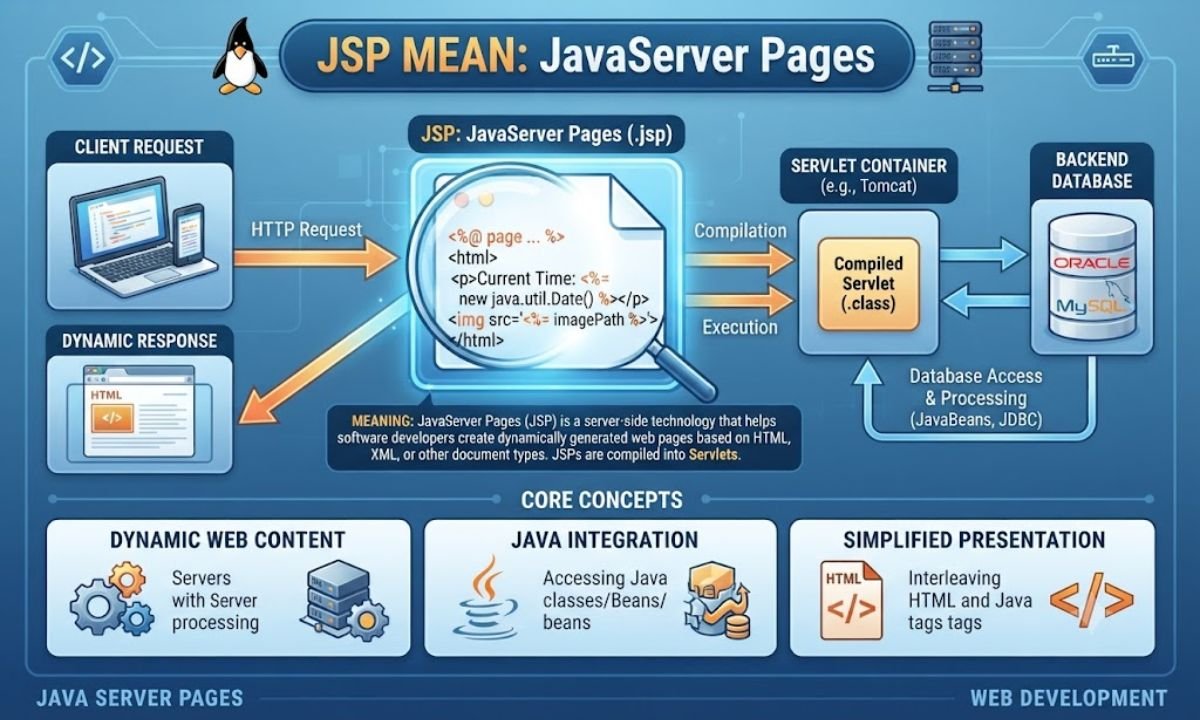

If you have ever gotten a text that just says “jsp” and had no idea what to make of it, you are not alone.
This tiny abbreviation shows up everywhere, from group chats to Discord servers, and it does not always mean the same thing twice.
This guide breaks down every common meaning of JSP, shows you real examples, and helps you figure out exactly what someone meant when they sent it.
Quick Answer
JSP most commonly stands for “Just Playing” in texting and social media, used to show that a comment was a joke and not meant seriously.
It can also mean “Je sais pas” (French for “I don’t know”), or in a technical context, JavaServer Pages, a web development technology. The correct meaning always depends on who sent it and where.
What Does JSP Mean in Text?
In everyday texting, JSP is almost always slang. It is a quick way to soften a statement or clear up confusion after a joke lands the wrong way.
Since text messages strip away tone of voice and Facial expression, abbreviations like JSP exist to fill that gap.
Meaning Table
| Meaning | Context | How Common It Is |
| Just Playing | Texting, Snapchat, TikTok | Most common |
| Je sais pas (I don’t know) | French speakers, Discord, TikTok | Common among French speakers |
| JavaServer Pages | Web development, tech forums | Common in technical settings |
| Jacketed Soft Point | Ammunition, hunting forums | Common in shooting communities |
| Just Saying, Period | Casual chat | Less common, but used |
JSP Meaning: Just Playing

This is the meaning you will bump into the most. When someone adds “jsp” to the end of a message, they are telling you not to take what they just said too seriously.
It works a lot like “jk” (just kidding), but it carries a slightly more playful, teasing energy rather than a corrective one.
Examples
- “You’re the worst texter alive, jsp 😂”
- “I’m never speaking to you again… jsp, obviously”
- “You owe me a hundred bucks. jsp lol”
JSP Meaning: Je sais pas
If you are chatting with someone who speaks French, or you follow French creators online, JSP might mean something completely different.
“Je sais pas” is the casual, spoken-French way of saying “I don’t know,” with the “ne” dropped the way it usually is in everyday speech. When texting took off, French speakers shortened it further down to just three letters.
Example
- Friend: “Où est-ce qu’on se retrouve ce soir?”
- You: “jsp, tu me dis”
JSP Meaning: JavaServer Pages
Step outside of casual chat and JSP takes on a completely different identity. In web development, JSP stands for JavaServer Pages, a server-side technology built on Java that lets developers create dynamic, data-driven web pages.
It mixes regular HTML with embedded Java code, so a page can pull live data from a database and display it to the user in real time.
JSP has been part of the Java ecosystem for years and is still used in plenty of enterprise applications, especially ones already built on Java infrastructure. If someone says “I’m debugging the JSP files,” they are talking about code, not texting slang.
Is JSP Formal or Informal?
JSP, in its slang form, is strictly informal. It belongs in casual conversations between friends, not in emails, cover letters, or workplace messages.
Using it with your boss or in a professional setting can come across as careless or immature, so it is best saved for texting, DMs, and social platforms where a relaxed tone is expected.
Text Messages
This is JSP’s home turf. It shows up constantly in one-on-one texts and group chats, almost always tacked onto the end of a joke or exaggerated statement.
Snapchat
On Snapchat, JSP fits naturally into quick captions and chat replies, especially paired with a laughing emoji or a silly Bitmoji reaction.
You will spot JSP in Instagram DMs and comment sections, often softening a sarcastic reply to a friend’s post or story.
TikTok
TikTok comment sections are full of JSP, usually clearing up whether a comment was a genuine roast or a friendly joke aimed at the creator.
Discord
In Discord servers, especially gaming and French-language communities, JSP can swing between “just playing” after trash talk and “je sais pas” when someone genuinely does not know the answer to a question.
Text Message Examples
Example 1: Friendly Joke
Alex: “You genuinely cannot cook to save your life.” Jordan: “Rude but okay, jsp right? 😂”
Example 2: Gaming
Sam: “You just got destroyed, uninstall the game.” Riley: “jsp, gg though, that was close.”
Example 3: School
Maya: “I’m telling the teacher you copied my homework.” Noah: “Wait jsp please don’t 😭”
Example 4: French Conversation
Léa: “Tu viens à quelle heure demain?” Théo: “jsp encore, je te dis plus tard”
Example 5: Social Media
Comment: “This outfit is a crime against fashion, jsp 😂 you look amazing”
How to Reply to JSP
There is no single “correct” response, since it depends on the vibe of the conversation. A few natural ways to reply include:
- “Haha okay good, you scared me for a second”
- “Lol I know, all good”
- A simple laughing emoji to show you got the joke
- If it seemed genuinely harsh, “all good, just checking you were kidding”
Common Mistakes and Misunderstandings

Confusing JSP With Just Saying
Some people assume JSP always means “just saying,” which explains a comment rather than excuses it. While this usage does exist, it is far less common than “just playing,” so context matters before you assume someone was simply stating an opinion.
Forgetting the French Meaning
English speakers sometimes miss the French usage entirely, which can lead to real confusion in international group chats. If a French-speaking friend replies “jsp” to a question, they are telling you they do not know, not making a joke.
Assuming JSP Always Means Text Slang
Not every JSP is slang. In professional or technical conversations, especially among developers, JSP almost always refers to JavaServer Pages, not a joke or a shrug.
Why People Use JSP
Texting removes tone of voice, so sarcasm and jokes can land the wrong way without warning. JSP exists to solve that exact problem.
It gives people a fast, low-effort way to signal “don’t take that seriously” without breaking the flow of a casual conversation.
It is short, expressive, and has become second nature for a huge number of texters, especially younger users who grew up messaging on phones and apps.
Other Meanings of JSP
Beyond texting, French, and coding, JSP shows up in a handful of other spaces:
- Ammunition: Jacketed Soft Point, a bullet design (covered in detail below)
- Education: Junior Secondary Programme, used in some school systems
- Organizations: Various institutes and societies use JSP as part of their acronym
Similar Texting Abbreviations
- JK – Just Kidding
- IJS – I’m Just Saying
- NVM – Never Mind
- IDK – I Don’t Know (the English equivalent of “jsp” in French)
- TBH – To Be Honest
- SMH – Shaking My Head
What Does JSP Mean From a Girl?
There is no different meaning of JSP based on who sends it. Whether it comes from a guy or a girl, JSP in a text almost always means “just playing,” signaling a joking, teasing, or lightly flirty tone. Context, not gender, is what determines the real meaning.
What Does JSP Mean in Ammo?
In shooting and hunting communities, <cite index=”9-1″>JSP stands for Jacketed Soft Point, describing a bullet where a soft lead core is partially wrapped in a harder metal jacket, usually copper or a copper alloy, leaving the tip exposed.</cite> This design is popular because it balances penetration with controlled expansion on impact.
JSP Meaning Bullet
<cite index=”11-1″>A JSP round is a semi-jacketed bullet, since the copper or brass jacket does not extend all the way to the tip, leaving some of the lead core exposed.</cite> That exposed tip is the key to how it performs.
<cite index=”17-1″>On impact, the soft lead point deforms and expands, creating a wound channel larger than the bullet’s original diameter.
</cite> This makes JSP ammunition a long-standing choice for hunters who need reliable expansion combined with deeper penetration than a typical hollow point offers.
JSP Life Cycle

For developers, “JSP life cycle” refers to the stages a JavaServer Page goes through when it is requested and rendered by a server. It generally moves through these phases:
- Translation – the JSP file is converted into a Java servlet
- Compilation – the servlet is compiled into bytecode
- Loading and Instantiation – the servlet class is loaded and an instance is created
- Initialization – the container calls the jspInit() method
- Request Processing – the container calls _jspService() to handle each incoming request
- Destruction – the container calls jspDestroy() when the page is removed from service
Understanding this cycle is essential for anyone debugging performance issues or writing custom JSP tags in a Java web application.
Final Thought
JSP is one of those small abbreviations that carries a surprising amount of weight depending on where you spot it. In a group chat, it is almost always harmless slang for “just playing,” a quick way to soften a joke before it lands wrong.
Outside of texting, the very same three letters can mean something as technical as JavaServer Pages or as specific as a type of hunting ammunition.
The trick to never getting confused again is simple: look at the conversation around it. A casual chat between friends points to slang, a French sentence points to “je sais pas,” and a tech forum points straight to coding.
Once you know the context, JSP stops being a mystery and just becomes another small piece of everyday digital language.
Frequently Asked Questions
What does JSP stand for in web development?
JSP stands for JavaServer Pages, a Java-based technology used to build dynamic, data-driven web pages by combining HTML with embedded Java code.
How is JSP used in enterprise web applications?
JSP is used to generate dynamic content on the server before sending finished HTML to the browser, making it common in Java-based enterprise systems that need to pull data from databases in real time.
Which companies offer JSP-based web hosting services?
Most major hosting providers that support Java, including providers offering Apache Tomcat or other Java servlet containers, can host JSP applications, since JSP runs on any server with a compatible Java servlet engine.
How does JSP function within a web application architecture?
JSP typically sits in the presentation layer of a Java web application, working alongside servlets and backend logic to render dynamic content that responds to user requests.
Can you explain the benefits of JSP over other web technologies?
JSP separates design from logic more easily than raw servlets, supports reusable tags and components, and integrates tightly with the broader Java ecosystem, making it a natural fit for teams already using Java.
What are the benefits of using JSP for dynamic content generation?
JSP allows developers to embed Java code directly into HTML, pull live data from databases, and reuse components across pages, which speeds up building pages that change based on user input or stored data.
Where can I find tutorials for learning JSP from scratch?
Free tutorials are available on sites like Oracle’s official Java documentation, JavaTpoint, and GeeksforGeeks, all of which cover JSP basics through advanced topics like custom tags and the JSP life cycle.
Which development environments are commonly used for JSP programming?
Popular choices include Eclipse and IntelliJ IDEA paired with Apache Tomcat as the servlet container, since both offer strong support for Java web projects and easy local testing of JSP files.

I am a dedicated author with 6+ years of experience writing and researching content for name meaning websites. My expertise includes American names, baby names, surnames, name origins, and cultural significance. I focus on creating accurate, well researched, and easy to read articles using trusted sources. My goal is to help readers discover the history, meaning, and uniqueness behind every name with reliable and engaging content.