
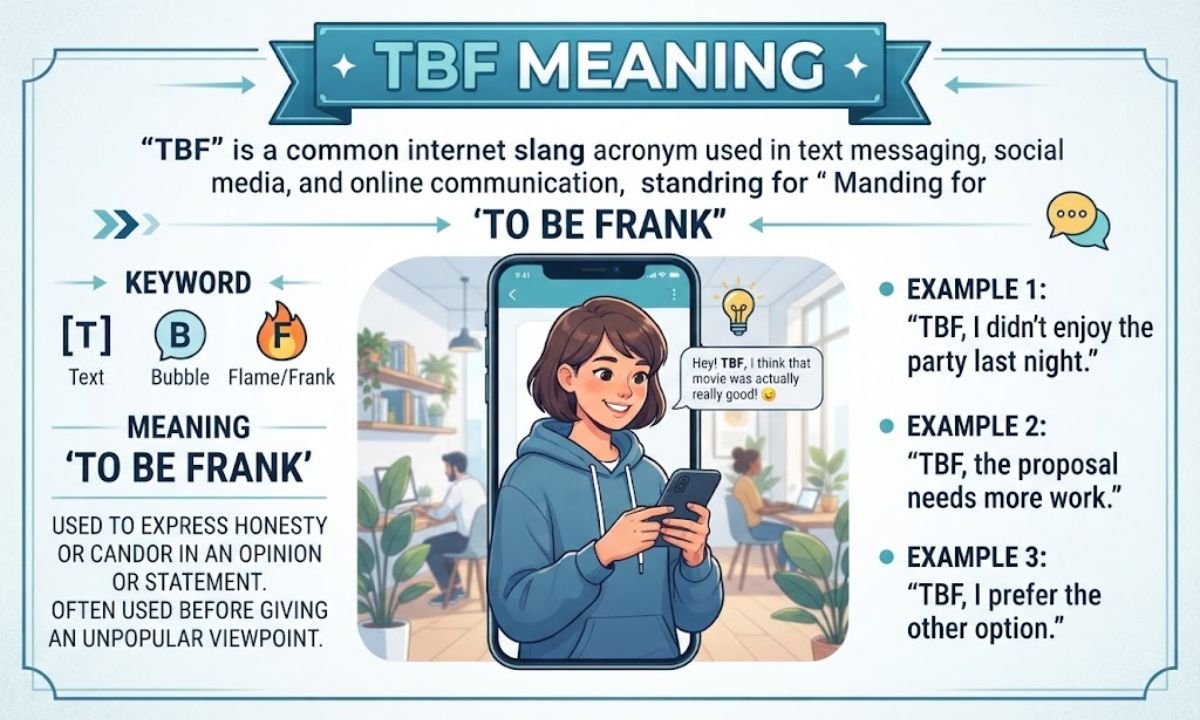

If you have scrolled through a group chat or a comment section lately, chances are you have run into the letters “TBF” dropped into the middle of a sentence.
It shows up in arguments, jokes, apologies, and casual opinions alike. But what does it actually mean, and why has it become such a staple of modern texting?
This guide breaks down the TBF meaning in plain language, shows you exactly how and when to use it, and clears up the confusion between TBF and its close cousin, TBH. By the end, you will be able to use TBF naturally and confidently in your own conversations.
What Does TBF Mean in Text Messages?
TBF stands for “To Be Fair.” It is used when someone wants to acknowledge a valid point, add context, or offer a more balanced take before or after making a statement.
Simple Definition
In simple terms, TBF means “to be fair” or “in fairness.” People use it to signal that they are being reasonable, even if what follows might sound like a mild disagreement or a different angle on the topic.
For example, someone might say, “TBF, he did apologize pretty quickly.” This shows the speaker is trying to give credit where it is due, even in a tense situation.
Why Is TBF So Popular in Texting and Social Media?
TBF has become popular because it fits perfectly into the fast, casual rhythm of digital conversation. It lets people express nuance in just three letters instead of typing out a full sentence.
Texting culture rewards brevity, and abbreviations like TBF let users sound thoughtful without slowing down the conversation. It also softens statements, which makes it useful for disagreements, debates, or callouts without sounding harsh.
Social media threads, especially on platforms built around fast-paced commentary, have helped push TBF into everyday vocabulary. It works well in replies, quote tweets, and comment sections where people want to add a fair counterpoint quickly.
How TBF Is Commonly Used in Text Messages?

TBF plays several roles depending on where it appears in a message. Understanding these patterns makes it easier to use the phrase naturally.
1. To Add Balance to an Opinion
People use TBF to make sure their opinion does not sound one-sided. It signals that they have considered another perspective before sharing their own.
Example: “That movie was boring. TBF, the acting was solid though.”
2. To Soften Criticism
TBF is often used right before pointing out something negative. It works like a cushion that makes the criticism feel less harsh.
Example: “TBF, you did say you’d be late, so I’m not that surprised.”
3. To Introduce a Contrasting View
Sometimes TBF is used to pivot the conversation and introduce a different angle that others may not have considered.
Example: “Everyone’s blaming the new guy. TBF, nobody actually trained him.”
4. To Justify an Action or Reaction
TBF can also explain why someone did something, especially if it might seem unusual or unexpected at first.
Example: “I left early, but TBF, the event ran way over time.”
Tone and Emotional Context of TBF
The tone behind TBF matters just as much as the words themselves. It usually signals thoughtfulness rather than confrontation.
Common Tones Associated with TBF
- Reasonable and level-headed
- Slightly reflective or reconsidering
- Mildly defensive, but not aggressive
- Balanced and fair-minded
Not Usually Used For
- Harsh insults or personal attacks
- Formal business communication
- Situations requiring full sentences and clarity, such as legal or medical contexts
Examples of TBF in Real-Life Text Conversations
Here are a few natural examples showing how TBF fits into everyday chats:
- “TBF, I probably would have done the same thing in her position.”
- “He’s annoying, but TBF, he did help us move all that furniture.”
- “TBF, the directions weren’t that clear to begin with.”
- “I know I’m late, but TBF, traffic was insane today.”
These examples show how TBF works as a quick way to acknowledge fairness without derailing the conversation.
Is TBF Formal or Informal?
TBF is strictly informal. It belongs in texting, social media comments, and casual conversations among friends, not in professional emails, reports, or official documents.
Using TBF in a formal setting can come across as unprofessional or too relaxed for the context. If you need a formal alternative, phrases like “to be fair” or “in fairness” written out in full work much better.
TBF vs TBH: What’s the Difference?
TBF and TBH are often confused because they look similar and appear in the same kinds of conversations. However, they serve different purposes.
TBH stands for “to be honest” and is used to share a personal, often blunt opinion. TBF stands for “to be fair” and is used to Acknowledge balance or fairness in a situation.
| Abbreviation | Full Meaning | Main Purpose | Typical Tone |
| TBF | To Be Fair | Adds balance or fairness to a statement | Reasonable, considerate |
| TBH | To Be Honest | Shares a personal or blunt opinion | Direct, sometimes blunt |
Example Comparison
- TBH: “TBH, I didn’t like the movie at all.”
- TBF: “TBF, the movie had a really strong opening scene.”
The first expresses a personal opinion. The second acknowledges something positive despite an overall negative view.
Common Misunderstandings About TBF

TBF is sometimes misread, especially by people who are less familiar with texting slang. Here are a few clarifications.
1. TBF Is Not Always Defensive
While TBF can soften criticism, it is not always used to defend someone. It is just as often used to add a neutral observation.
2. TBF Is Not Sarcastic by Default
Some readers assume TBF carries a sarcastic tone, but this depends entirely on context. On its own, TBF is a neutral, fairness-driven phrase.
3. TBF Doesn’t Mean Agreement
Using TBF does not mean the speaker fully agrees with the other person. It simply means they are acknowledging one fair point among possibly several disagreements.
When NOT to Use TBF in Text Messages
TBF is not always the right fit. Avoid using it in the following situations:
- In formal or professional communication
- When the topic is sensitive, such as grief or serious personal issues
- When clarity is more important than brevity, such as instructions or explanations
- In messages to people who may not be familiar with texting abbreviations
Alternatives to TBF in Text Messages
If TBF does not fit the tone you’re going for, there are several alternatives you can use instead.
Casual Alternatives
- “Fair point, but…”
- “Ngl, that’s fair”
- “Ok but in fairness…”
Softer Phrases
- “That said…”
- “On the other hand…”
- “To give credit where it’s due…”
TBF in Social Media and Online Culture
TBF thrives in comment sections, quote posts, and reply threads where people want to add nuance quickly. It is common in debates about sports, entertainment, politics, and everyday relatable content.
Because online conversations move fast, TBF gives users a shorthand way to sound fair-minded without writing long responses. This has helped the term spread across platforms and age groups, especially among younger internet users.
Why Understanding TBF Matters?

Knowing what TBF means helps you read tone correctly in fast-moving conversations. Misreading it as sarcasm or dismissal can lead to unnecessary misunderstandings.
Understanding common texting abbreviations like TBF also helps you communicate more naturally online, whether you’re chatting with friends or scrolling through social media comments.
Conclusion
TBF simply means “to be fair,” and it is one of the most useful phrases in casual texting today. It helps people sound balanced, thoughtful, and reasonable, even when they are pointing out something critical or contrasting.
Once you understand how TBF works, spotting it in conversations becomes second nature. Whether you’re using it yourself or just trying to read a text correctly, TBF is a small phrase that adds real clarity to everyday digital conversations.
Frequently Asked Questions
What does TBF mean in online messaging?
TBF stands for “to be fair.” It is used to acknowledge a fair or balanced point, often before or after sharing an opinion.
What does TBF mean in online conversations?
In online conversations, TBF is used to add nuance or fairness to a statement, especially during casual debates or discussions.
Are there apps that define internet slang and acronyms?
Yes, apps and websites like Urban Dictionary, along with built-in keyboard suggestions on many phones, can help define internet slang and acronyms like TBF.
How is TBF used in texting slang?
TBF is used in texting slang to soften criticism, add balance to an opinion, or introduce a fair counterpoint in a casual, quick way.
How to appropriately use TBF in casual text messages?
Use TBF right before a statement that adds fairness or context, such as “TBF, he did try his best.” Keep it casual and avoid formal settings.
What does TBF stand for in gaming chats?
In gaming chats, TBF still means “to be fair” and is commonly used to acknowledge a good play, fair strategy, or valid point during matches.
Where can I find a guide to common internet abbreviations?
Slang dictionaries like Urban Dictionary, texting abbreviation guides, and social media help centers are good places to find common internet abbreviations.
What is the full form of TBF in internet acronyms?
The full form of TBF is “To Be Fair,” commonly used across texting and social media platforms.
What are the common contexts for using TBF in social media posts?
TBF is commonly used in comment sections, replies, and quote posts to add a balanced or fair perspective during casual online discussions.

I am a dedicated author with 6+ years of experience writing and researching content for name meaning websites. My expertise includes American names, baby names, surnames, name origins, and cultural significance. I focus on creating accurate, well researched, and easy to read articles using trusted sources. My goal is to help readers discover the history, meaning, and uniqueness behind every name with reliable and engaging content.