

If you have seen “wtv” pop up in a text, a comment section, or a group chat and paused to figure out what it means, you are not alone.
This short abbreviation shows up everywhere online, from TikTok replies to Discord servers, and it carries more emotional weight than its three letters suggest.
This guide breaks down exactly what WTV means, where it came from, and how to use it correctly in real conversations.
Slang like this evolves fast, and keeping up can feel like learning a second language. By the end of this article, you will understand not just the definition of WTV, but also the subtle emotional cues hidden behind it, so you never misread a message again.
What Does WTV Mean in Slang?
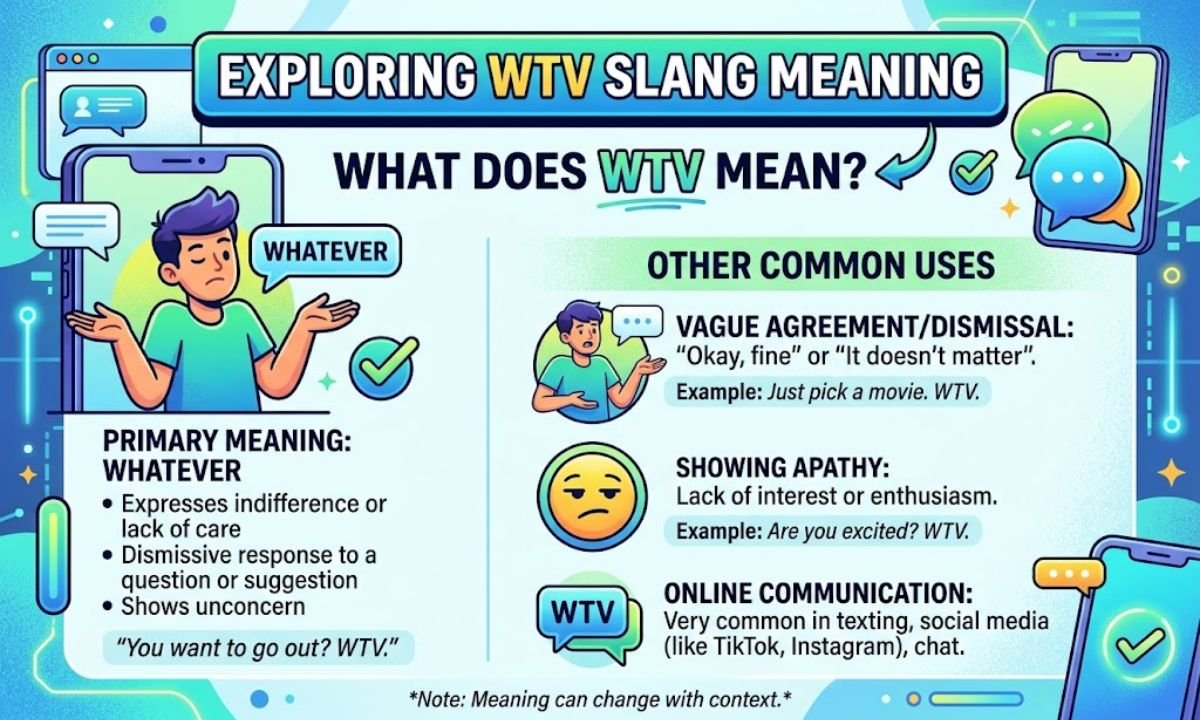
WTV is simply a shortened way of typing “whatever.” People use it to save time while texting or chatting online, especially in fast-moving conversations where every second counts. It is one of many abbreviations that grew out of texting culture, alongside terms like “idk” or “tbh.”
Simple Definition
At its core, WTV means “whatever.” It is used to express indifference, acceptance, mild annoyance, or a casual “it doesn’t matter” attitude, depending on the context of the conversation.
Why Is “WTV” So Popular?

WTV caught on because it fits perfectly into how people communicate today: quickly, casually, and often on small mobile keyboards. Typing three letters instead of eight is an easy habit to pick up. It also carries a certain tone that full words sometimes lose in text form, making it feel more natural in informal chats.
Origin and History of WTV
Like most internet abbreviations, WTV grew out of early instant messaging platforms such as AIM and MSN Messenger, where users shortened common words to type faster. As texting became the dominant form of communication in the 2000s and 2010s, abbreviations like WTV, “brb,” and “lol” became standard shorthand. Social media platforms later cemented WTV into everyday online vocabulary.
Flip phones with limited keypads also played a role in popularizing shorter spellings, since typing “whatever” letter by letter on a numeric keypad was slow and tedious. As smartphones took over, the habit stuck around simply because it was faster and felt more natural in a fast-scrolling digital world. Today, WTV persists not out of necessity but out of habit and culture.
The Emotional Meaning Behind “WTV”
WTV is not a one-note word. Its meaning shifts heavily based on tone, punctuation, and the conversation it appears in.
Neutral or Chill
Sometimes WTV simply means “I’m easy either way.” For example, someone might text “wtv you want to eat is fine with me” to show they have no strong preference.
Dismissive or Uninterested
In other cases, WTV signals that someone has checked out of the conversation. A one-word reply of “wtv” after a long message often means the person does not want to engage further.
Frustrated or Annoyed
WTV can also carry frustration, especially when someone feels unheard or tired of arguing. It becomes a way to end a disagreement without continuing to fight.
Sarcastic or Passive-Aggressive
When paired with punctuation like “wtv.” or “wtv lol,” the word can take on a sarcastic edge, hinting that the speaker disagrees but does not want to explain why.
Accepting or Letting Go
Finally, WTV can express genuine acceptance, as in “wtv happens, happens.” This version reflects a relaxed, go-with-the-flow mindset rather than negativity.
How to Use WTV in a Sentence (Real Examples)
Context changes everything with this slang term. Here is how it typically shows up across different situations.
Casual Texting
“wtv time works for you, I’m free all day.”
Social Media Comments
“lol wtv, it’s not that deep.”
Gaming Chat
“wtv, let’s just start the next round.”
Teen Conversations
“wtv, I don’t even care anymore.”
Relationship Conversations
“wtv you decide, I trust you.”
WTV vs. Whatever: Is There a Difference?
The core meaning is the same, but the feel is different. “Whatever” spelled out can sound more deliberate or emphatic, sometimes even harsher. WTV, being shorter and more casual, often reads as lighter or quicker, though it can still carry an edge depending on tone.
| Feature | WTV | Whatever |
| Formality | Very casual | Slightly more formal |
| Common Platform | Texting, chat apps | Speech, formal writing |
| Emotional Weight | Depends on context | Often stronger emphasis |
| Typing Speed | Faster | Slower |
Common Variations and Related Slang
WTV has inspired and connects to several other shorthand expressions used in similar situations.
Variations
- Wtvr
- Wutever
- Wtv man
- Wtv then
Similar Slang Expressions
- Idc (I don’t care)
- Nvm (never mind)
- K (okay, often short and dismissive)
- Fine (used similarly in tone)
When NOT to Use WTV
Because WTV can sound dismissive, there are moments where it can do more harm than good in a conversation.
Avoid Using WTV In:
- Professional emails or workplace chats
- Serious or emotional conversations
- Conflict resolution discussions
- Messages to someone you don’t know well
- Customer service or formal messaging
Better Alternatives to WTV (Depending on Situation)
If you want to soften your tone or sound more thoughtful, there are simple swaps that keep the same meaning without the dismissive edge.
- “I’m fine with either option” instead of “wtv”
- “Let me know what works” instead of “wtv you want”
- “No strong preference here” for neutral situations
- “Let’s talk about it” instead of ending with “wtv” during a disagreement
Is WTV Rude?
WTV is not inherently rude, but it can come across that way depending on timing and tone. Ending a serious conversation with a flat “wtv” can feel dismissive, even if that was not the intention. Reading the room before using it helps avoid unnecessary misunderstandings, especially with people who may not know you well enough to read your tone accurately.
How WTV Is Used Across Platforms
Different platforms shape how WTV gets used and interpreted.
Text Messages
Typically used to keep replies short and casual between friends or family.
TikTok Comments
Often used sarcastically or humorously in response to a video or another comment.
Discord & Gaming Chats
Used quickly during gameplay to move conversations along without slowing down the action.
Instagram & Snapchat
Common in quick replies to stories or DMs, usually with a relaxed tone.
Twitter/X Replies
Frequently used to brush off an opinion or end a back-and-forth exchange.
Psychological Meaning Behind Saying “Whatever” or “WTV”

Psychologists often note that saying “whatever” can be a coping mechanism for avoiding conflict or masking deeper frustration. It allows a person to disengage without saying something they might regret. In some cases, it can also reflect emotional fatigue rather than true indifference.
This kind of verbal Shrug can also act as a protective wall. Rather than risk sounding overly emotional or vulnerable, some people default to WTV because it feels safer than expressing exactly how they feel. Understanding this can help the person on the receiving end respond with more patience instead of frustration.
WTV in Relationships & Friendships
In Romantic Relationships
WTV can signal emotional distance if used repeatedly during disagreements, since it often shuts down further discussion. Partners should pay attention if this word becomes a pattern rather than an occasional response.
In Friendships
Among friends, WTV is usually harmless and reflects comfort and shorthand communication built over time. It rarely needs deeper interpretation in casual friend groups.
WTV in School and Teen Slang
WTV is especially common among teens and young adults, both in person and online. It functions as a quick way to express boredom, mild rebellion, or simple agreement without much effort, fitting naturally into school hallway conversations and group chats.
Is WTV Appropriate in Professional Settings?
No, WTV should generally be avoided in professional communication. It can come across as careless or unprofessional, even if that is not the intent, so formal alternatives are always the safer choice at work.
Common Misunderstandings About WTV
Misconception 1: WTV always means anger
Not true. WTV is frequently neutral or even friendly, depending on the sentence around it.
Misconception 2: WTV is always rude
Tone and context matter more than the word itself; many uses are perfectly polite.
Misconception 3: WTV only teenagers use it
Adults use WTV regularly too, especially in casual texting and social media.
Misconception 4: WTV means “I don’t care about you”
Usually it refers to indifference about a decision or topic, not the person in the conversation.
WTV vs. Similar Slang Abbreviations
| Abbreviation | Meaning | Typical Tone |
| WTV | Whatever | Neutral to dismissive |
| IDC | I don’t care | Often more blunt |
| NVM | Never mind | Ends a thought quickly |
| K | Okay | Short, sometimes cold |
How to Respond to Someone Who Says “WTV”
Friendly or Neutral Context
A simple “okay, sounds good” keeps the conversation light and moving.
Emotional or Conflict Situation
Try asking, “Are you okay? You seem upset,” to open the door for honest communication.
Playful Context
Match the energy with something like “lol fine, wtv works” to keep things easygoing.
WTV in Different Cultures and Languages
While WTV is rooted in English texting culture, similar dismissive shorthand exists in other languages too, often translated loosely as “whatever” or “it’s fine.” Global messaging apps have helped spread this kind of casual shorthand across borders.
Why People Love Using WTV
WTV is quick, easy to type, and instantly understood by most people online. It fits naturally into fast-paced digital conversations where full sentences can feel unnecessary or slow.
It also gives people a sense of control in a conversation without requiring a long explanation. A single short reply can close a topic, soften a moment, or simply signal that someone is ready to move on, all without extra typing effort.
Summary: What Does WTV Mean?
WTV means “whatever” and is used to express anything from calm indifference to mild frustration. Its meaning depends heavily on tone, punctuation, and the relationship between the people talking.
Wtv meaning internet slang
Across the internet, WTV is widely recognized shorthand for “whatever,” used in comments, chats, and captions to express a casual or indifferent attitude.
What does WTV mean from a girl
From a girl, WTV usually reflects the same general meaning as anyone else: indifference, acceptance, or mild annoyance, shaped by the specific conversation rather than gender.
What does wtv mean from a boy
Similarly, when a boy uses WTV, it typically reflects casual indifference or a quick way to move past a topic, not a meaning unique to gender.
Wtv slang meaning urban dictionary
Urban Dictionary entries for WTV generally align with mainstream usage, defining it as a shorthand for “whatever” with variations in tone from playful to dismissive.
WTV meaning Medical

Outside of texting slang, WTV does not have a standard recognized meaning in medical contexts, so any medical use would depend entirely on a specific institution’s internal shorthand.
Final Thoughts
WTV is a small word with a lot of flexibility built into it. Once you understand the tone behind it, decoding what someone really means becomes much easier.
Whether it shows up in a text, a comment, or a chat message, context is always the key to reading it correctly. With this guide, you should now feel confident using and interpreting WTV in any conversation.
Frequently Asked Questions
What does wtv mean in texting slang?
WTV is a shorthand way of typing “whatever,” used to express indifference, acceptance, or mild frustration depending on context.
What does wtv mean in a text message?
In a text message, WTV usually signals that the sender is okay with any outcome or wants to move past the current topic quickly.
How do popular social media platforms define wtv?
Most platforms don’t officially define it, but community usage consistently treats WTV as slang for “whatever.”
How to correctly use wtv in online chat
Use WTV in casual, low-stakes conversations, and avoid it during serious or emotional discussions where tone can be easily misread.
Which messaging apps support auto-definitions for wtv slang?
Some keyboard apps and messaging platforms offer built-in slang suggestions or definitions, though this varies by device and app settings.
Is wtv considered rude or dismissive?
It can be, especially if used to end a serious conversation abruptly, but in casual contexts it is usually harmless.
Can I use wtv in professional communication apps?
It’s best to avoid WTV in professional settings and use clearer, more formal phrasing instead.
Where can I find reliable explanations for wtv slang online?
Slang dictionaries, language blogs, and community-driven sites like Urban Dictionary are common sources for slang definitions like WTV.

I am a dedicated author with 6+ years of experience writing and researching content for name meaning websites. My expertise includes American names, baby names, surnames, name origins, and cultural significance. I focus on creating accurate, well researched, and easy to read articles using trusted sources. My goal is to help readers discover the history, meaning, and uniqueness behind every name with reliable and engaging content.