

You see the word clout everywhere online. It shows up in comments, captions, group chats, and even office talk. So what does clout mean, and why does it sound different depending on who says it?
This guide explains the slang meaning, how Gen Z uses it, and how to reply when someone drops it in a chat. You will also find real chat examples, a comparison table, and notes on how other cultures use the word.
Clout – Quick Meaning
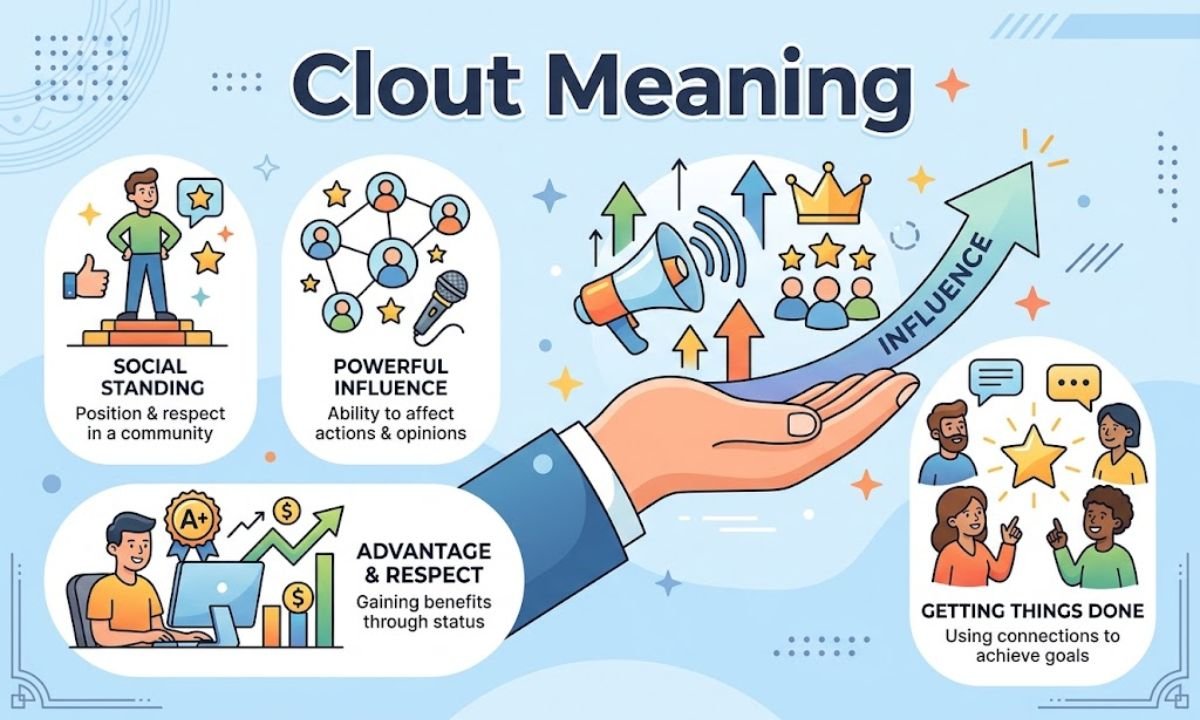
Clout means influence, power, or social weight. In slang, it usually points to online fame, popularity, or being taken seriously by a crowd.
Quick snapshot:
- Core meaning: influence, reputation, or pull
- Tone: positive, neutral, or sarcastic
- Common phrases: “has clout,” “clout chaser,” “for the clout”
- Part of speech: a noun, though people joke with it like a verb
Short Definition You Can Remember
Think of clout as “people listen to you.” If your opinion moves a crowd, you have clout.
One-Line Example
“That creator has real clout in the gaming community.” Here, it simply means respected and influential.
Origin & Background of the Word “Clout”
Early Meaning
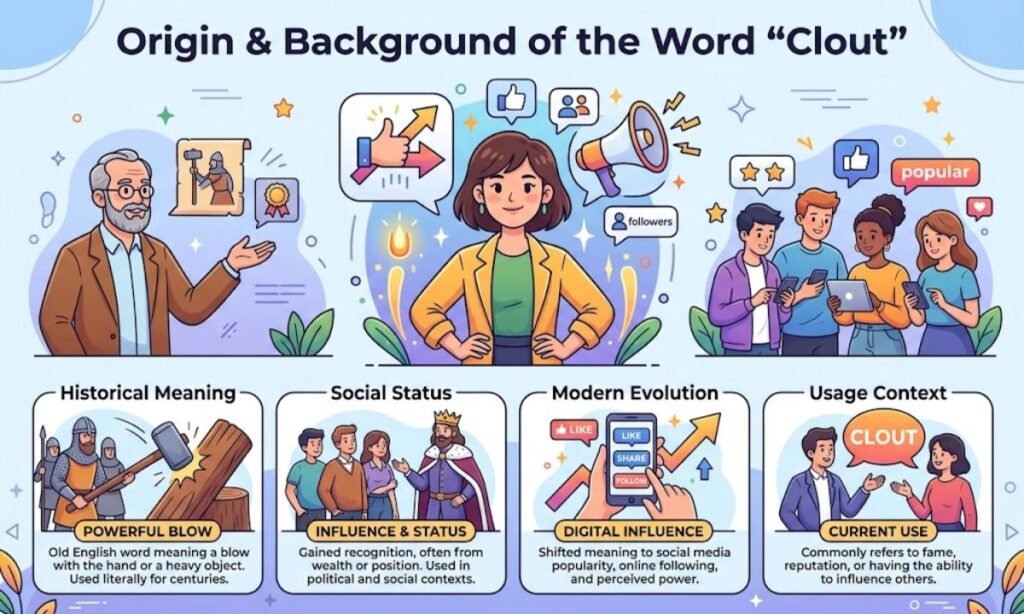
Long before Instagram, clout meant a piece of cloth or a rag. It also meant a hard blow, like a clout on the head. Dictionaries trace both senses back many centuries.
By the 1800s, people used it for political muscle. A senator with clout could push a bill through.
Evolution of the Meaning
The idea of a heavy hit slowly turned into the idea of force. Force became power. Power became influence.
By the 2000s, the word sat comfortably in business and pop culture. It described anyone who could shape decisions or draw attention.
Internet & Cultural Influence
Hip-hop and social media gave the word a second life. Rappers used it to talk about status and reach. Fans then carried it to Instagram, Twitter, and TikTok.
Rapper Denzel Curry even joked about “clout goggles,” meaning trendy sunglasses worn for attention. Today the word often links to followers, likes, and going viral.
Real-Life Conversations (How People Actually Use “Clout”)
Slang makes more sense in context. Here are three short chats that show the range.
WhatsApp Chat
Hamza: Did you see Ali’s new profile pic? Sara: The one with sunglasses indoors? Total clout move. Hamza: He got 400 likes though. Sara: Okay fine, the clout is working lol
Sara uses “clout” playfully. She teases Ali for posing, but she admits it worked.
Instagram DMs
Maya: Why did you tag that brand five times? Zoe: They might repost me. I need the clout. Maya: Just post normally, they’ll notice.
Zoe is honest about her goal. Here, clout means a small boost in visibility.
TikTok Comments
“He only posted this for the clout 💀” “Zero clout, infinite confidence” “She has actual clout, look at who collabs with her”
The first two comments mock someone. The third one is a genuine compliment about real influence.
Emotional & Psychological Meaning of Clout
Why People Want It
Clout gives a feeling of being seen. Likes and shares work like tiny doses of approval. Humans want to belong, so this makes sense.
For many creators, it also feels like proof of effort. A rising count says, “People care about what I make.”
The Pressure Behind It
Chasing clout can bring stress. Checking numbers all day can hurt self-esteem. Some people start to perform for an audience instead of living their lives.
That pressure is why many Gen Z users joke about it. Humor makes the anxiety easier to carry.
Healthy vs Unhealthy Clout
- Healthy: earned through skill, helpful content, or honest work
- Unhealthy: built on lies, stunts, or hurting others
- Healthy: you can log off and feel fine
- Unhealthy: your mood rises and falls with the numbers
Usage in Different Contexts
Social Media
This is the home turf of the word. It describes follower counts, engagement, and who gets noticed. A post with “no clout” simply failed to reach people.
Brands also talk about clout when picking creators for campaigns. They want voices that audiences trust.
Friends & Relationships
Among friends, clout is mostly a joke. You might tease someone for posting a fancy dinner. “Clout dinner,” you say, and everyone laughs.
In relationships, though, it can sting. Accusing a partner of posting you “for clout” suggests they care more about the audience than about you.
Work & Professional Settings
At work, clout means influence inside the company. The manager whose ideas get approved has clout. The new hire usually has less.
Here the word is neutral and formal. It rarely carries the sarcasm you see on TikTok.
Casual vs Serious
| Setting | Tone | Example |
| Casual chat | Playful, teasing | “That’s a clout post.” |
| Social media | Mixed | “Her clout keeps growing.” |
| Workplace | Neutral, formal | “He has clout with the board.” |
| Politics | Serious | “The senator’s clout is fading.” |
Common Misunderstandings About Clout
Clout = Money
Clout and money are not the same thing. A person can have thousands of followers and a tiny bank balance. Another can be rich and almost unknown online.
Clout can lead to money through deals and sponsorships. But the path is not automatic.
Clout Is Always Fake
Not true. Plenty of people earn clout honestly. A skilled chef, a trusted teacher, or a funny writer can build real influence.
The “fake” label fits only when someone invents drama or lies for attention.
Clout Is Always Negative
The word is neutral by default. Context decides whether it sounds like praise or an insult.
“She has clout” is a compliment. “He’s chasing clout” is usually a criticism.
When NOT to Use It
Skip the word in these situations:
- Formal writing where “influence” sounds cleaner
- Serious personal moments, like grief or illness
- Talking to people who may not know the slang
- Accusing someone publicly without any proof
Comparison Table
Clout often gets mixed up with similar words. This table shows the differences.
Clout vs Fame vs Influence
| Term | Meaning | Key Difference |
| Clout | Power to sway or get noticed | Often tied to social credibility |
| Fame | Being widely known | Known does not mean respected |
| Influence | Ability to change opinions or actions | Broader and more formal |
| Hype | Short-term excitement | Fades quickly |
| Status | Position in a group | Can exist without an audience |
Picking the Right Word
Use “fame” when many people know someone. Use “influence” for lasting impact. Use “clout” when you mean credibility plus attention.
Variations / Types of Clout
Common Slang Forms
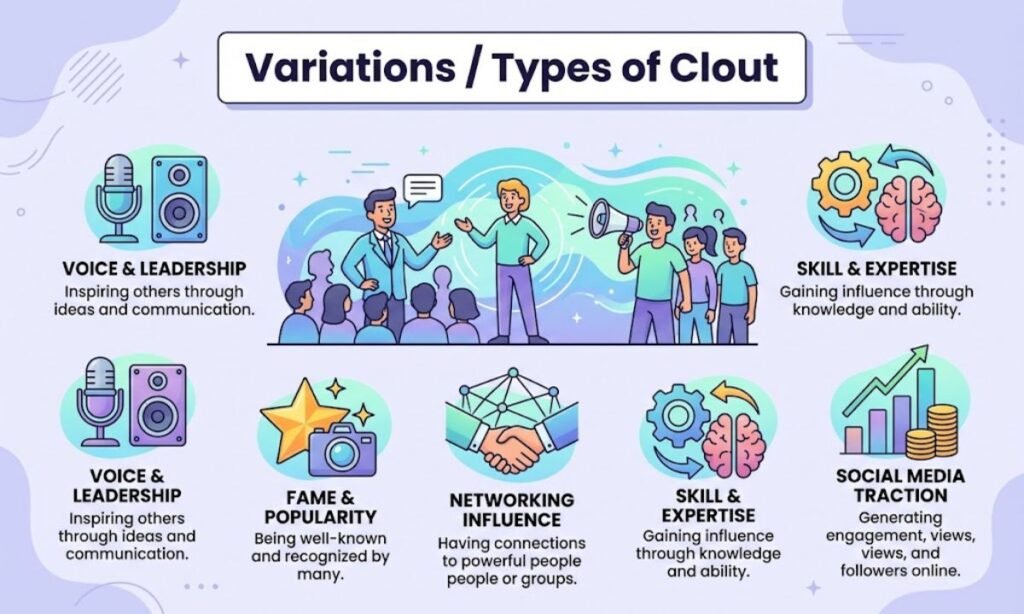
- Clout chasing: doing things mainly to gain attention
- Clout farming: posting bait to collect engagement
- Clout bait: content designed to provoke reactions
- Clout demon: someone obsessed with getting noticed
Types by Area
- Social clout: followers, likes, and shares
- Street or music clout: respect within a scene
- Professional clout: authority at work or in an industry
- Political clout: power to shape policy
How to Respond When Someone Uses “Clout”
Casual Replies
- “Haha, maybe a little.”
- “Guilty. It looked good though.”
- “Fair, I’ll take it.”
Funny Replies
- “Clout is my love language.”
- “Sorry, my clout is currently on vacation.”
- “Rent is due, so yes, I need the clout.”
Mature / Confident Replies
- “I post what I enjoy. If it grows, great.”
- “I’m not chasing it, but I appreciate the support.”
- “Everyone wants to be heard. That’s fair.”
Private / Respectful Replies
If the comment feels personal, move it out of public view. Try: “Can we talk about this privately?” A calm tone ends most arguments fast.
Regional & Cultural Usage
Western Culture
In the US and UK, clout is common in music, sports, and social media. People use it casually and often sarcastically. Business media also use it in a serious sense.
Asian Culture
Many Asian youth communities borrow the English word online. Local phrases often replace it in daily speech. Fame and “traffic” are sometimes discussed together.
Middle Eastern Culture
Arabic speakers usually use words for influence or standing. Among young, English-speaking users, “clout” appears in meme and creator culture. Social reputation matters strongly there, so the idea feels familiar.
Global Internet
On the global internet, clout travels easily. Memes, gaming streams, and short videos spread it across borders. The meaning stays mostly the same: attention and influence.
clout meaning slang
As slang, clout means popularity with power attached. It describes someone whose name carries weight among peers.
You will hear it in rap lyrics, creator talk, and daily chat. Most of the time, it points to attention that is either admired or mocked.
clout meaning in social media
On social platforms, clout is influence measured by reach and engagement. Followers, shares, saves, and brand deals all feed it.
Marketers use the term for creators who can move an audience. Still, a big number does not always mean real trust.
chasing clout meaning
Chasing clout means doing something mainly to get attention. Examples include staged pranks, fake drama, or tagging famous people in every post.
The phrase is usually critical. It suggests the person cares more about numbers than about honesty.
rot for clout meaning
This phrase is not in standard dictionaries. Online, it loosely describes posting absurd, low-effort, or “brain rot” content just to get views.
The joke is that people will sacrifice quality for attention. Treat it as playful internet slang, not a formal term.
Clout meaning group
A clout group is a crew or friend circle that boosts each other online. They tag, repost, and appear in each other’s videos.
Sometimes it is genuine friendship. Other times it is a smart way to share audiences.
Clout meaning in russian
Russian speakers use “клаут” (klaut) as a borrowed word, mostly in rap and online circles. It points to hype and social weight.
In formal Russian, people say “влияние” (influence) or “авторитет” (authority) instead.
Clout meaning in Chinese
Chinese has no single slang twin. Common equivalents are 影响力 (influence) and 话语权 (the power to be heard).
For clout chasing, people often say 蹭热度, which means riding on a trend for attention.
Clout meaning scottish
In older Scots, a “clout” meant a cloth or rag. It also meant a smack, as in a clout round the ear.
The clootie dumpling gets its name from the cloth it is boiled in. The modern social media meaning is a later English import.
Clout meaning in french
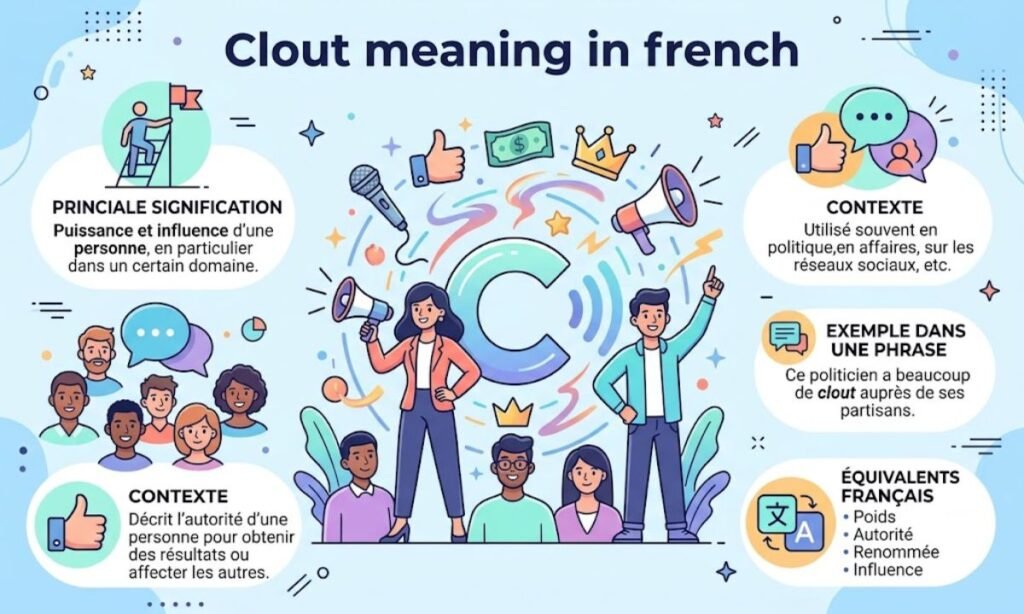
French has no exact match. Speakers say “influence,” “poids,” or “notoriété” for the idea.
For chasing attention, “chercher le buzz” is common. Young online users also borrow “clout” directly.
Clout meaning gen z
For Gen Z, clout means online status, and the word is often ironic. It can describe real influence or a try-hard stunt.
Tone decides everything. Read the emoji, the speaker, and the situation before reacting.
Conclusion
Clout started as cloth and a hard hit. It grew into political power, then into the language of social media.
Today it means influence, attention, or credibility. Whether it sounds like praise or mockery depends on who says it and why.
Use it with care, match your tone to the setting, and remember that real influence usually comes from honest work.
Frequently Asked Questions
What does clout mean in social media marketing?
It means a person’s or brand’s ability to influence audiences through reach, engagement, and trust. Marketers use it to pick creators for campaigns.
What does “clout” mean in a modern context?
Today it means influence, popularity, or social credibility, especially online. It can be praise or a joke, depending on tone.
What does clout mean?
Clout means influence or power. Online, it usually refers to popularity and being noticed.
What does clout mean in slang?
In slang, clout means fame, status, or attention gained on social media. It can sound admiring or sarcastic.
What does chasing clout mean?
It means doing things mainly to gain attention or followers. The phrase is usually mildly critical.
Is clout good or bad?
Neither by default. Earned clout is respected, while forced or fake clout gets mocked.

I am a dedicated author with 6+ years of experience writing and researching content for name meaning websites. My expertise includes American names, baby names, surnames, name origins, and cultural significance. I focus on creating accurate, well researched, and easy to read articles using trusted sources. My goal is to help readers discover the history, meaning, and uniqueness behind every name with reliable and engaging content.