
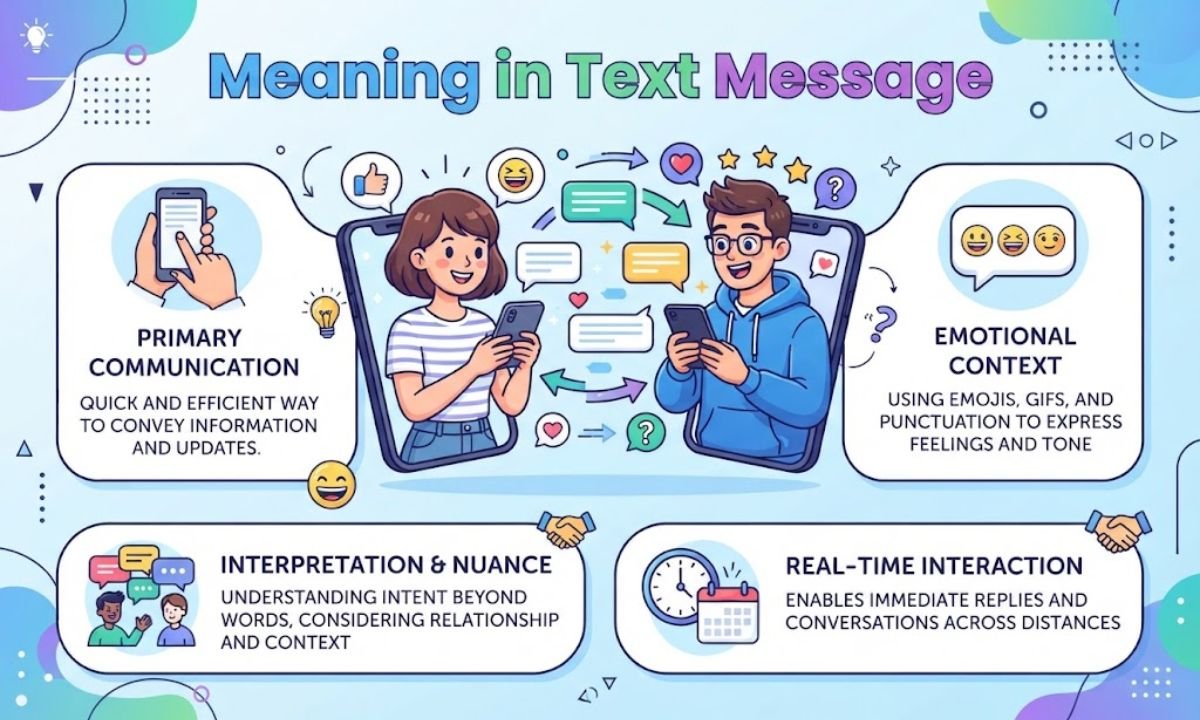

A text lands. It’s just one character long: “-“. No words, no emoji, no explanation. You reread it twice, wondering if the other person got cut off, got annoyed, or just fat-fingered their keyboard.
That confusion is exactly why so many people search for what a dash actually means in a text message.
On its own, punctuation like this doesn’t follow a fixed rulebook — its meaning shifts depending on who sent it, which app it landed in, and what was said right before it. A dash can be hesitation, shock, sarcasm, suspense, or nothing more than an accidental send.
This guide unpacks what “-” really means across WhatsApp, Instagram, TikTok, and regular SMS: where the habit came from, how it differs from an ellipsis or a period, and how to actually respond when it shows up in your own inbox.
“-” Meaning in Text Message – Quick Meaning
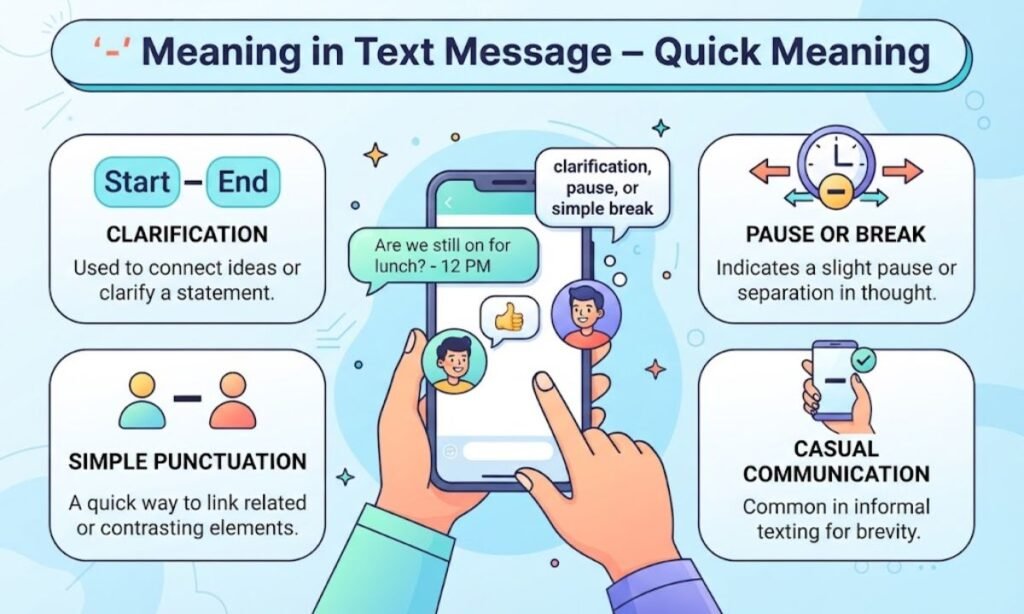
In the simplest terms, a dash in a text message usually signals an interrupted or unfinished thought. It’s the texting equivalent of someone starting a sentence out loud and then stopping abruptly.
Unlike an ellipsis, which trails off gently, a dash cuts off sharply — as if the sender was typing something and then changed their mind, got distracted, or was cut short by shock or hesitation.
Sent completely on its own, with no words attached, the dash usually communicates one of these things:
- A reaction too big (or too awkward) to put into words
- A pause while the sender figures out what to say next
- A placeholder sent by accident before the real message follows
- A subtle, sarcastic, or deadpan response to something
A Single Dash Sent Alone
When “-” arrives as the entire message, it almost always functions as a stand-in for “I don’t know how to respond to that” or “I’m processing this.”
It’s the digital version of a raised eyebrow or a long exhale. Some people use it after reading something surprising, awkward, or slightly unhinged — the dash says “I saw that” without committing to an actual reaction.
It’s worth noting that a lone dash rarely carries anger on its own. It’s more often a placeholder for a reaction that hasn’t fully formed yet, which is exactly why it confuses so many people receiving it for the first time.
Origin & Background of the Dash in Digital Communication
The dash didn’t start out as a texting symbol at all — it’s one of the oldest punctuation marks in the English language, originally used in formal and literary writing to signal a break in a sentence, set off a parenthetical remark, or show an abrupt interruption in dialogue.
Writers have used it for centuries to represent a character’s speech being cut off mid-thought, whether by another person, a sudden realization, or an external event.
That literary function — marking an abrupt stop — is exactly what carried over into digital communication.
When people started chatting online and later texting, they needed a fast way to represent the same kind of interruption you’d see in a novel or screenplay, without typing out a full sentence explaining it. The dash was already sitting right there on the keyboard, so it got repurposed.
From Grammar to Online Tone
In formal grammar, a dash sets off extra information or marks a sharp break in a sentence. In texting, that same “sharp break” idea got stripped down to pure tone.
Instead of using it to separate clauses, people started using it to separate a thought from silence — ending a sentence with a dash to show that something was left unsaid, often on purpose.
This shift happened gradually through instant messaging platforms, forums, and early chat rooms, where users adapted punctuation to carry emotional weight that words alone couldn’t quickly express. A dash became less about grammar and more about implication.
Social Media Influence
Social media accelerated this shift massively. Platforms like Twitter (X), Tumblr, and later TikTok and Instagram rewarded short, punchy text.
A single dash fit perfectly into caption culture, comment sections, and quote-tweet culture, where a trailing dash after a bold or funny statement suggested “and that’s all I have to say about that.”
As younger users grew up communicating primarily through screens, punctuation started carrying more emotional nuance than ever before.
A dash, once a formal writing tool, became a compact way to express hesitation, shade, or unfinished emotion — all without typing a single extra word.
Real-Life Conversations Using “-“
Seeing the dash in action makes its meaning much clearer than any definition alone. Here’s how it typically plays out across different apps.
WhatsApp Conversation
Sara: did you hear what happened at the office today Zain: no what happened Sara: – Zain: okay now you HAVE to tell me
Here, the dash signals that the story is too big, too messy, or too awkward to summarize in a quick message. It builds suspense rather than shutting the conversation down.
Instagram DM
User1: I might’ve accidentally liked your ex’s photo from 2019 User2: –
In a DM context, a solo dash often reads as stunned silence — the digital equivalent of blinking slowly at your phone before typing anything else.
TikTok Comments
“when the villain has a better redemption arc than the actual hero -“
On TikTok and similar platforms, a trailing dash at the end of a comment usually implies “I could keep going, but I’ll stop there.” It adds a knowing, slightly sarcastic tone without needing extra words.
Text Message
Mom: Your report card came in the mail today. You: – Mom: We need to talk.
In a standard SMS thread, this kind of dash often signals nervous hesitation — the sender knows a response is expected but doesn’t quite know how to start typing it.
Emotional & Psychological Meaning of “-“
Punctuation choices reveal more about a sender’s emotional state than most people realize. The dash, in particular, tends to show up during moments of internal conflict — when someone feels something but hasn’t translated that feeling into words yet.
It Can Show Hesitation
A dash frequently appears when someone is unsure how to respond. Rather than leaving the chat on “read” with no reply at all, sending a dash acknowledges the message while buying time to think. It’s a low-effort way of saying “I saw this, give me a second.”
It Can Express Shock
When news is unexpected, funny, or dramatic, a dash can stand in for a reaction that’s too big for words. It mimics the real-life pause people take when they’re genuinely stunned — the beat of silence right before “wait, WHAT?”
It Can Create Awkwardness
Because the dash is so ambiguous, it can also unintentionally create tension. A recipient might read a plain “-” as disinterest, annoyance, or discomfort, even when the sender only meant it playfully.
This mismatch between intent and interpretation is exactly why the dash causes so much confusion in everyday texting.
How “-” Is Used in Different Contexts
The meaning of a dash shifts significantly depending on where it’s used and who’s using it. A dash from a close friend reads very differently than the same dash from a coworker.
Social Media
On public platforms, dashes are often stylistic. They’re used at the end of witty captions, comments, or tweets to imply a mic-drop moment — the sender is deliberately stopping themselves from saying more, for comedic or dramatic effect.
Friends and Relationships
Between friends, a dash is usually casual and playful. It’s shorthand within an established texting rhythm, and both people typically understand the tone because of years of inside jokes and shared context.
Work and Professional Settings
In professional messaging, a lone dash is far less common — and far more likely to be misread as passive-aggressive or dismissive.
Colleagues generally expect clearer, more complete responses, so a solitary dash in a work Slack or email thread can come across as unprofessional or confusing.
Casual vs. Serious Tone
| Setting | Likely Meaning of “-“ | Recommended Response |
| Close friends | Playful hesitation, shock, or suspense | Ask a follow-up question or joke back |
| Romantic partner | Nervousness, flirtation, or awkward pause | Give them space, then check in gently |
| Family member | Discomfort or unsure how to reply | Follow up with a direct, low-pressure question |
| Coworker/boss | Often unintentional or a typo | Clarify professionally if needed |
| Public comment/caption | Stylistic, sarcastic emphasis | No response needed — it’s for effect |
When NOT to Use “-“
While the dash works well in casual, low-stakes conversations, there are situations where it can do more harm than good.
Sensitive Conversations
During emotionally serious conversations — breakups, grief, health concerns, conflict resolution — a dash can feel dismissive or cold. When someone needs clarity or reassurance, an ambiguous punctuation mark can make them feel unheard rather than understood.
Cross-Cultural Communication
Texting norms vary widely across cultures and languages. A dash that reads as playful hesitation in one cultural context might be interpreted as abruptness, rudeness, or disinterest in another.
When texting someone from a different cultural or linguistic background, it’s safer to use clearer language rather than relying on punctuation-based tone.
Common Misunderstandings About “-” in Text
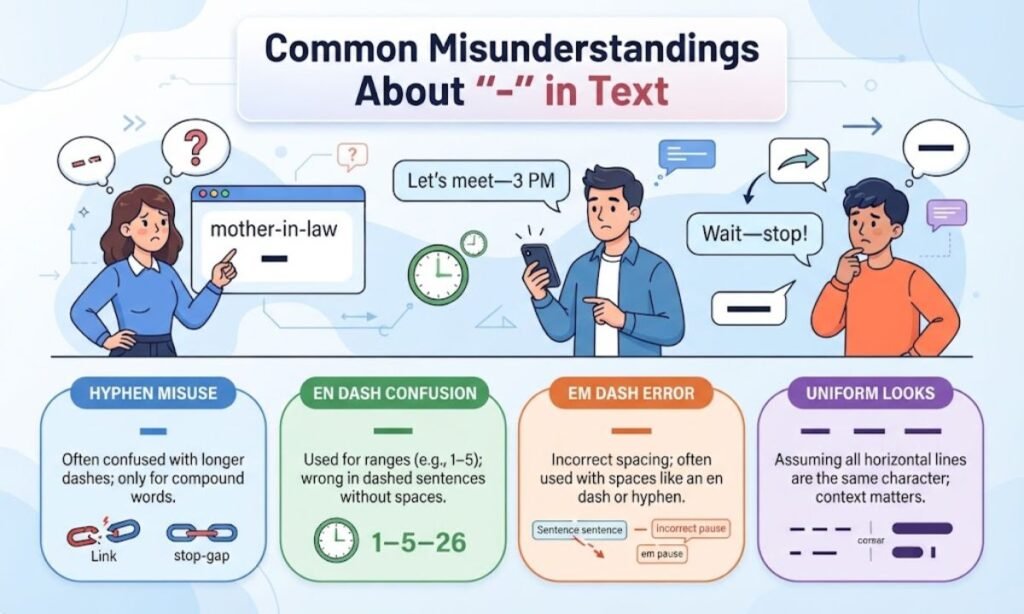
Because the dash is so open to interpretation, it’s easy to misread — both as a sender and as a recipient.
“-” Does Not Automatically Mean Annoyance
One of the biggest misconceptions is that a dash always signals irritation. In reality, it’s far more often about processing a thought, not expressing anger. Reading annoyance into every dash can lead to unnecessary overthinking or conflict.
A Dash Is Not Always Slang
Not every dash is a deliberate texting choice. Sometimes it’s simply left over from autocorrect, a keyboard slip, or an unfinished sentence that got sent too early. Not every punctuation mark carries hidden meaning — sometimes a dash really is just a dash.
“Okay-” and “Okay.” Are Different
The punctuation attached to “okay” changes its entire tone. “Okay.” can read as final, flat, or slightly annoyed.
“Okay-” reads as more open-ended, like the sender has more to say but hasn’t finished the thought. Misreading these small differences is one of the most common sources of texting miscommunication.
“-” Compared With Similar Texting Expressions
| Symbol | Typical Tone | Common Meaning |
| “-” (dash) | Abrupt, cut-off | Interrupted thought, shock, hesitation |
| “…” (ellipsis) | Slow, trailing | Unfinished thought, awkward pause, suspense |
| “.” (period) | Flat, final | Seriousness, annoyance, closure |
| No punctuation | Casual, neutral | Relaxed, low-stakes tone |
| “!” (exclamation) | Energetic | Enthusiasm, excitement, urgency |
Key Insight
The dash and the ellipsis are the two symbols most often confused with each other, but they carry different emotional textures. An ellipsis trails off gradually, almost gently, while a dash cuts a thought off sharply and suddenly — closer to an interruption than a fade-out. Recognizing that difference makes it much easier to read the real tone behind a message.
10 Variations of “-” in Texting
Different phrases paired with a dash carry noticeably different meanings. Here’s a breakdown of the most common ones.
1. “-“
Standalone and open to interpretation — usually shock, hesitation, or “I don’t know what to say.”
2. “Wait-“
Signals sudden realization or a request to pause the conversation before continuing.
3. “Oh-“
Often reflects mild surprise, disappointment, or a shift in understanding mid-thought.
4. “Okay-“
Suggests reluctant or hesitant agreement, with more thoughts left unspoken.
5. “But-“
Implies the sender wants to push back or clarify something but hasn’t finished forming the objection.
6. “I mean-“
Usually signals the sender is about to soften, correct, or rephrase what they just said.
7. “What-“
Expresses confusion or disbelief, often used humorously in reaction to something unexpected.
8. “Bro-“
A casual, often comedic exclamation used among friends reacting to something ridiculous.
9. “You actually-“
Implies mild disbelief or playful judgment about something the other person did or said.
10. “-_-“
Technically an emoticon rather than a plain dash, this represents a flat, unimpressed, or exasperated expression — the texting equivalent of a deadpan stare.
How to Respond When Someone Uses “-“
Knowing how to reply to a dash depends heavily on your relationship with the sender and the context of the conversation.
Casual Repli
- Mirror the tone with your own short reaction, like “lol what”
- Send a follow-up question to keep the conversation moving
- Reply with a matching dash if the vibe feels mutual
Funny Replies
- “-” back as a joke, playing along with the ambiguity
- A meme or GIF that captures the same “I have no words” energy
- Something exaggerated like “the way you said NOTHING else”
Mature Replies
- Ask directly: “what’s on your mind?”
- Acknowledge the pause: “take your time, I’m here”
- Avoid assuming the worst before getting more context
Respectful Replies
- Give the sender space instead of demanding an immediate explanation
- Check in gently rather than pressing for details
- Avoid reading too much negativity into a single character
Regional & Cultural Usage of “-“
Texting punctuation habits aren’t universal — they shift depending on region, platform culture, and generational norms.
Western Internet Culture
In much of the US, UK, and other English-speaking online spaces, the dash is closely tied to meme culture and sarcastic humor, often used at the end of a bold or funny statement for comedic emphasis.
Asian Digital Culture
In several Asian messaging cultures, punctuation carries strong emotional signals, and a dash can be used similarly — to soften a statement or leave a sentence intentionally open rather than final.
Middle Eastern Digital Culture
Texting norms across Middle Eastern digital spaces often favor more expressive language and emojis alongside punctuation, meaning a bare dash without extra context can feel unusually blunt compared to a fuller message.
Global Internet Usage
As global platforms like TikTok and Instagram blend texting styles across countries, the dash has become increasingly universal among younger internet users, even as its exact emotional weight still shifts slightly by region.
Gen Z vs. Millennials
Millennials tend to associate a lone dash with awkwardness or unfinished thoughts, often reading it more literally. Gen Z users are more likely to use it stylistically and ironically, treating punctuation itself as a tone indicator rather than a strict grammatical rule.
Is “-” Safe for Kids?
For the most part, a dash in texting is harmless — it’s punctuation, not a coded symbol tied to anything dangerous. Still, its ambiguity is worth understanding if you’re a parent trying to make sense of a child’s or teenager’s messages.
Why Kids Might Misread a Dash
Younger texters, especially those newer to digital communication, may take a dash more literally than intended, mistaking a friend’s playful hesitation for anger or rejection. This can lead to unnecessary anxiety over a message that wasn’t meant to carry any weight at all.
Tips for Parents
- Explain that punctuation-only replies are common in casual texting and rarely mean something serious
- Encourage kids to ask a direct follow-up question instead of guessing at meaning
- Watch for patterns rather than single messages — repeated short, cut-off replies paired with other signs of distress are more worth a conversation than one isolated dash
When to Have a Conversation
If a dash consistently appears alongside withdrawal, secrecy, or other changes in behavior, it’s the surrounding pattern — not the punctuation itself — that’s worth addressing directly and calmly.
“…” Meaning in Text Message
Three dots at the end of a message typically represent a slow, deliberate trailing off — hesitation, suspense, or an unfinished thought the sender wants you to notice.
Unlike a dash, which cuts off sharply, an ellipsis lingers, often implying “there’s more to this” without saying it outright.
Btw Meaning in Text Message
“Btw” is shorthand for “by the way,” used to introduce a side note or additional piece of information that isn’t the main point of the conversation. It’s a lighthearted way to pivot topics without making the shift feel abrupt.
Kk Meaning in Text Message
“Kk” is a casual, doubled-up version of “okay,” typically used to confirm something quickly and informally. It usually carries a friendly, low-effort tone rather than anything cold or dismissive — think of it as a quick nod rather than a full sentence.
Bb Meaning in Text Message
“Bb” most commonly stands for “baby” or “babe,” used as an affectionate nickname between close friends or romantic partners. Context determines the tone — it’s almost always warm rather than formal.
Meaning in Text Message From a Girl
Punctuation and word choice can carry extra emotional nuance depending on who’s sending it, but there’s no universal rulebook tied to gender. A dash from any sender is best interpreted through the lens of your specific relationship, past texting patterns, and the conversation’s context rather than broad generalizations.
Meaning in Chat From a Guy to a Girl
The same logic applies here: a dash, a short reply, or minimal punctuation doesn’t inherently signal disinterest or seriousness. Reading intent accurately means paying attention to consistent patterns over time, not decoding a single character in isolation.
Meaning in Text Message From a Guy
Short or ambiguous replies, including a lone dash, are sometimes stereotyped as a sign of low interest — but this varies enormously by individual texting habits. Some people simply text more minimally across the board, regardless of how they feel about the conversation.
What Does “…” Mean in Text Reply
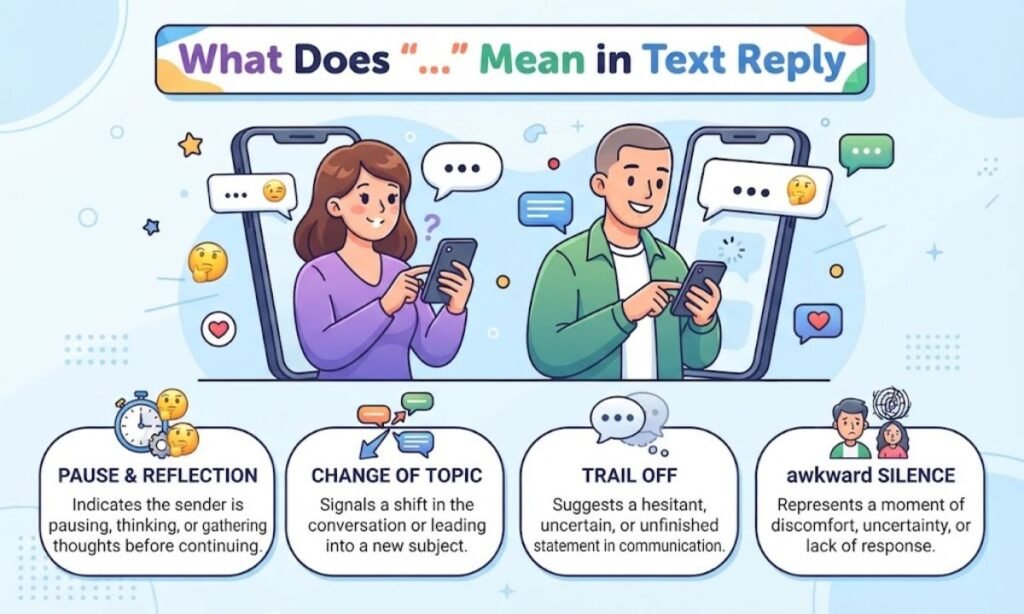
When “…” appears as a reply on its own, it typically suggests the recipient is speechless, processing something surprising, or intentionally leaving a beat of silence for dramatic or emotional effect — similar to a dash, but slower and more drawn out.
Meaning in Text Slang
Texting slang as a whole relies on shared context between sender and recipient. Abbreviations, punctuation marks, and emoticons all function as shorthand for tone, replacing the vocal inflection and body language that are missing from written messages.
Understanding any piece of texting slang — dash included — comes down to reading the relationship, the platform, and the conversation as a whole.
Conclusion
A single dash in a text message can mean a dozen different things depending on who sent it, where it was sent, and what came before it.
Sometimes it’s genuine hesitation. Sometimes it’s shock. Sometimes it’s pure comedic timing, or nothing more than an accidental keystroke. What makes the dash so tricky — and so common — is exactly that flexibility.
Rather than trying to memorize one fixed meaning, the most reliable approach is to read the dash the same way you’d read a pause in a real conversation: through tone, timing, and the relationship you already have with the person on the other end.
When in doubt, a simple follow-up question will always tell you more than overanalyzing a single punctuation mark ever could.
Frequently Asked Questions
What does a specific abbreviation mean in text messages?
Most texting abbreviations shorten common phrases for speed, and their exact meaning usually depends on context. When unsure, checking a slang dictionary or simply asking the sender is the fastest way to confirm.
How can I decode slang used in text messaging apps?
Look at the surrounding conversation for clues, and compare the term against a trusted online slang glossary if the meaning still isn’t clear. Context almost always narrows down the intended meaning quickly.
How to interpret ambiguous emojis in a text?
Consider the sender’s usual texting style, the topic being discussed, and any accompanying words before assuming a specific emotional tone. When emojis feel unclear, a quick clarifying question avoids misreading the message.
Which apps provide definitions for text message acronyms?
Several slang dictionary websites and apps are dedicated specifically to decoding texting abbreviations and acronyms, and many keyboard apps also offer built-in suggestions for common shorthand.
What does ‘lol’ truly signify in different contexts?
“Lol” can mean genuine laughter, a polite acknowledgment, or a way to soften an awkward or serious statement, depending entirely on tone and context. It rarely means literal “laughing out loud” anymore in casual use.
Where can I find a list of popular text message abbreviations?
Slang and abbreviation glossary sites maintain regularly updated lists of texting shorthand, organized alphabetically or by category for quick reference.
Can I use a service to translate text message shorthand?
Yes, several online tools and slang translators exist specifically to convert texting abbreviations and symbols into plain language for easier understanding.

I am a dedicated author with 6+ years of experience writing and researching content for name meaning websites. My expertise includes American names, baby names, surnames, name origins, and cultural significance. I focus on creating accurate, well researched, and easy to read articles using trusted sources. My goal is to help readers discover the history, meaning, and uniqueness behind every name with reliable and engaging content.