
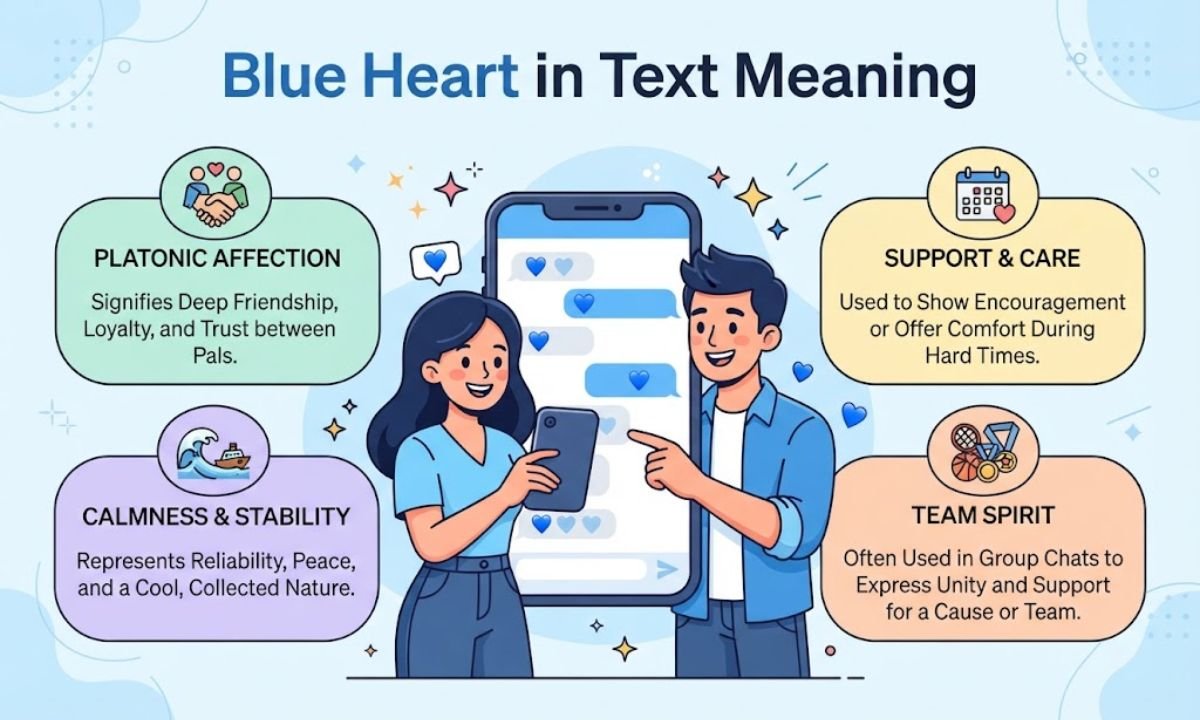

If someone just sent you a 💙 and you’re staring at your screen wondering what it actually means, you’re not alone.
The blue heart is one of the most-searched emojis online, and its meaning shifts depending on who sends it, where it shows up, and the conversation around it.
This guide breaks down everything you need to know about the blue heart in text meaning, from its origins to how it’s used across different apps, cultures, and relationships.
By the end, you’ll know exactly how to read a blue heart when you receive one, and when you should (or shouldn’t) send one yourself.
Blue Heart in Text Meaning – Quick Meaning
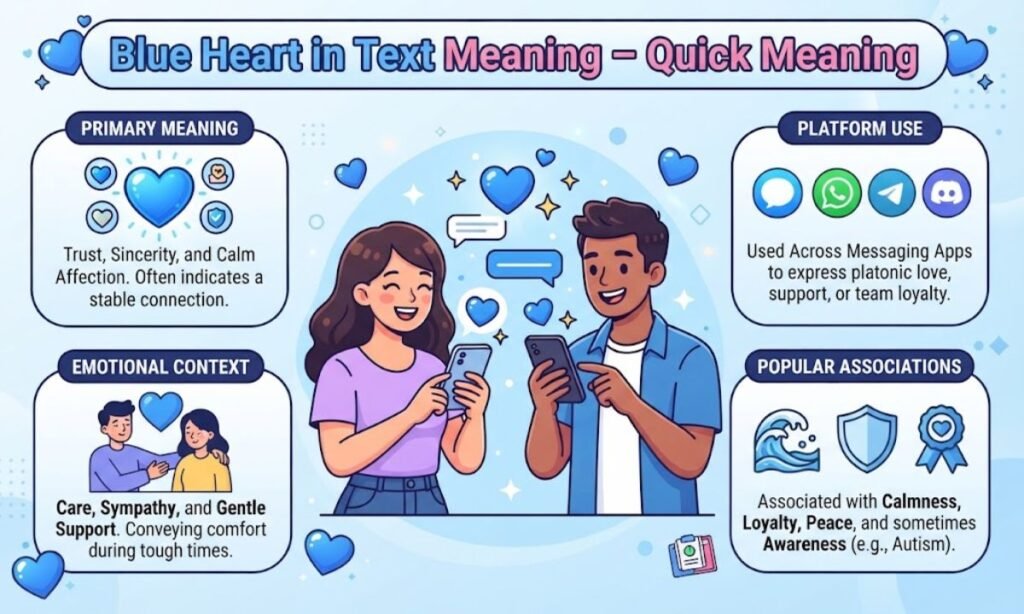
At its core, the blue heart symbolizes trust, loyalty, calmness, and deep platonic affection. Unlike the red heart, which almost always signals romantic love, the blue heart carries a softer, more grounded emotional tone.
It’s commonly used to express:
- Deep friendship or loyalty
- Trust and emotional safety
- Calm, steady support (rather than intense passion)
- Admiration without romantic intent
- Support for causes, teams, or communities associated with the color blue
Quick Examples
- A friend texts, “Thank you for always being there 💙” — this signals gratitude and trust, not romance.
- A fan account posts “💙 forever” under a sports team’s photo — this shows loyalty to the team’s colors.
- Someone replies “💙💙💙” to a heartfelt paragraph — this shows they’re touched but keeping things platonic.
Origin & Background
Emojis didn’t start with deep symbolic meaning attached to every color. Most of that meaning was built by users over time, through repeated context and shared understanding across social platforms.
Where Did the Blue Heart Emoji Come From?
The blue heart emoji was added to the Unicode Standard in 2010 as part of the original emoji set and became widely available on smartphones a few years later. Like most colored hearts, it started as a simple visual variant of the red heart, without any officially assigned “meaning” beyond affection in general.
Social Media Influence
Platforms like Twitter, Instagram, and Facebook played a huge role in shaping how the blue heart is interpreted today. Fan communities began pairing it with brand colors, sports teams, and causes, which pushed it toward “loyalty” and “support” rather than romance.
How Its Meaning Has Evolved
Early on, many people used the blue heart interchangeably with the red heart. Over time, as red became firmly associated with romantic love, blue carved out its own lane — representing trust, stability, and friendship.
Gen Z conversations on TikTok and Discord accelerated this shift, often using blue hearts to signal “close but not dating.”
Real-Life Conversations
Context changes everything with emojis. Here’s how the blue heart typically shows up across different messaging platforms.
On WhatsApp, the blue heart often appears in family group chats or long-term friend groups. It usually signals warmth and reassurance, such as replying to good news with a simple “💙” instead of a full sentence.
Instagram DM
In Instagram DMs, a blue heart is frequently used as a low-pressure way to respond to a compliment or a supportive comment. It shows appreciation without implying romantic interest.
TikTok Comments
TikTok users often drop blue hearts on comments related to loyalty, nostalgia, or shared identity — like commenting under a video about hometown pride or a favorite sports team.
Text Message
In a plain text message, a blue heart is commonly sent between close friends or family members as a quick way to say “I care about you” without the romantic weight a red heart might carry.
Emotional & Psychological Meaning
Colors influence emotion, and blue is widely associated with calmness, stability, and trust in color psychology. That association carries directly into how people interpret the blue heart emoji.
Sending a blue heart often reflects a desire to express genuine care while keeping emotional intensity low. It feels safe, dependable, and non-demanding — which is exactly why it’s so popular in long-term friendships and family relationships.
Personal Scenario
Imagine a friend going through a hard week. Instead of writing paragraphs, you send “Thinking of you 💙.” That single emoji communicates steady support without overwhelming them with words, and it lands as sincere rather than performative.
Usage in Different Contexts
The same emoji can mean different things depending on where and how it’s used. Here’s a breakdown of common contexts.
Social Media
On public platforms, the blue heart often ties to identity, fandom, or advocacy — think autism awareness campaigns, police and first responder support, or a favorite brand’s color scheme.
Friends & Relationships
Between friends, it reinforces closeness without confusion. Between couples, it can appear early in a relationship before red hearts are exchanged, signaling growing trust before romance is confirmed.
Work or Professional Settings
In workplace chats, a blue heart is generally considered safe and appropriate, especially in casual company culture. It reads as friendly appreciation rather than anything personal.
Casual vs Serious Tone
In casual chats, it’s often playful or lighthearted. In more serious conversations, such as offering condolences or comfort, it takes on a gentler, more sincere tone.
When NOT to Use It
There are moments where a blue heart can feel off, confusing, or even inappropriate.
- Avoid sending it as a first romantic move — it may send mixed signals since it isn’t clearly romantic.
- Skip it in formal or corporate emails, where any emoji may seem unprofessional.
- Don’t use it during a serious disagreement, since it can come across as dismissive of the conversation’s tone.
- Be cautious using it with someone new, as they may not yet understand your emoji habits.
Common Misunderstandings
Because emoji meanings aren’t official, misinterpretation happens often. Here are the most common mix-ups people run into.
It Doesn’t Always Mean Romantic Love
Many assume any heart emoji equals romance. In reality, the blue heart leans platonic far more often than romantic, especially in friend groups and family chats.
Color Can Change Meaning
A slightly different shade — like light blue instead of navy blue — can shift the tone from “calm and trustworthy” to “cool and playful.” Small visual differences carry real emotional weight for frequent emoji users.
Context Is Everything
The same blue heart can mean loyalty in one conversation and quiet romantic interest in another. Reading the surrounding message, relationship history, and tone matters more than the emoji alone.
Comparison Table
| Emoji | Common Meaning | Typical Use Case |
| ❤️ Red Heart | Romantic love, passion | Couples, strong romantic feelings |
| 💙 Blue Heart | Trust, loyalty, calm affection | Friends, family, fandoms |
| 💜 Purple Heart | Compassion, admiration, sensuality | Close friends, subtle romantic hints |
| 💚 Green Heart | Growth, harmony, nature, jealousy (playful) | Environmental causes, playful teasing |
| 🩷 Pink Heart | Sweetness, gentle affection | Cute, soft romantic or friendly moments |
| 🤍 White Heart | Purity, new beginnings, sincerity | Weddings, fresh starts, quiet support |
| 🖤 Black Heart | Dark humor, mourning, edgy affection | Sarcasm, grief, aesthetic captions |
| 🤎 Brown Heart | Grounded, earthy connection | Cultural pride, stability |
| 💛 Yellow Heart | Friendship, happiness | Best friends, cheerful support |
Key Insight
No heart color has a universally fixed meaning. The blue heart’s reputation for loyalty and trust is strong, but tone, relationship, and platform ultimately decide what it communicates.
Variations & Similar Heart Emojis
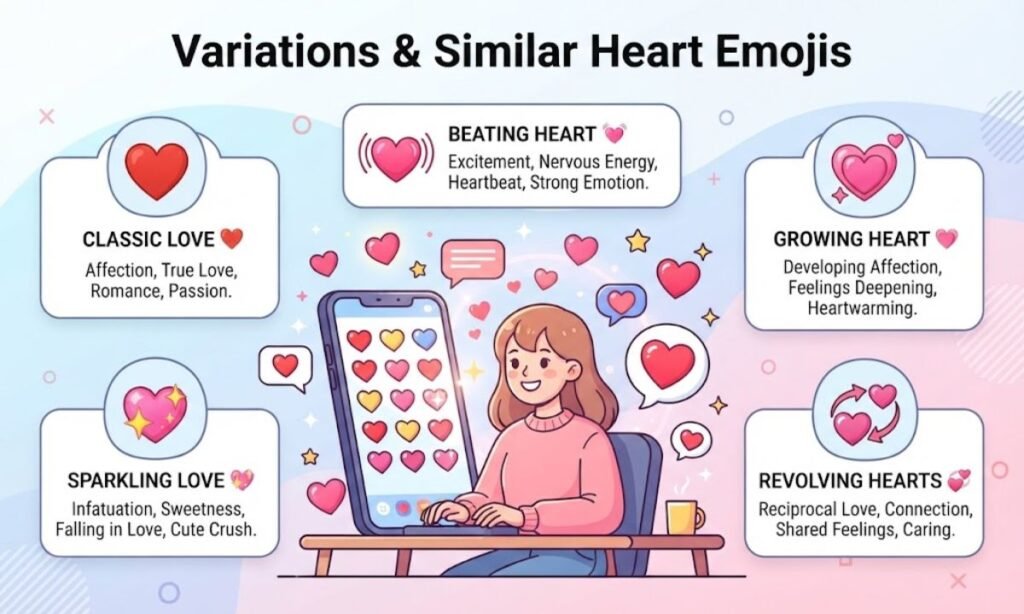
Understanding related hearts helps clarify what makes blue distinct.
Red Heart
The default symbol for passionate, romantic love and the most emotionally intense of all heart emojis.
Light Blue Heart
A newer, brighter variant that leans playful and youthful, often used by younger users on TikTok and Instagram.
Purple Heart
Sits between friendship and romance, often used for close bonds with a hint of deeper affection.
Green Heart
Tied to nature and growth, and sometimes used humorously to express jealousy.
Pink Heart
Soft and sweet, frequently used for cute moments between friends or new romantic interests.
White Heart
Represents purity and calm sincerity, often used in more solemn or heartfelt messages.
Black Heart
Can express dark humor, grief, or an edgy aesthetic depending on context.
Brown Heart
Often tied to cultural representation and grounded, earthy connection.
Yellow Heart
A classic symbol of friendship and cheerful, uncomplicated happiness.
Heart Hands
A hand gesture emoji (🫶) that has grown popular as a warmer, more personal alternative to any heart emoji, often paired with blue hearts for extra emphasis.
How to Respond When Someone Uses It
Not sure how to reply to a blue heart? Here are a few ways to respond depending on your relationship and tone.
Casual Replies
- “💙 right back at you”
- “Aww, love that”
Funny Replies
- “Careful, my heart’s not ready for this much loyalty”
- “😂💙 you’re too sweet”
Mature Replies
- “That really means a lot, thank you”
- “I appreciate you too, genuinely”
Respectful Replies
- A simple “Thank you 🙏” works well if you want to keep things neutral.
- “That’s kind of you to say” keeps the tone warm without adding romantic implication.
Regional & Cultural Usage
Emoji interpretation isn’t universal — culture shapes how symbols like the blue heart are understood.
Western Culture
In the US and Europe, the blue heart is strongly linked to friendship, causes, and fandom loyalty, especially sports and music fan communities.
Asian Culture
In parts of Asia, blue hearts are often used to express calm support and are popular in K-pop fan communities to show loyalty to a specific group or member.
Middle Eastern Culture
Blue is culturally significant in many Middle Eastern regions, often tied to protection and good fortune, which adds an extra layer of meaning beyond typical emoji use.
Global Internet Usage
Across gaming communities and global fandoms, the blue heart frequently represents unity and shared identity among large, dispersed groups of fans.
Gen Z vs Millennials
Gen Z tends to use blue hearts more casually and frequently, often stacking multiple emojis together, while millennials are more likely to use a single blue heart deliberately to convey sincerity.
Is It Safe for Kids?
Yes, the blue heart is generally considered safe and age-appropriate for kids and teens. It carries no explicit or romantic connotation by default and is commonly used in school group chats, family messages, and kid-friendly social platforms to express friendship and support.
Parents should still keep general context awareness in mind, since any emoji’s meaning can shift based on the full conversation, but the blue heart itself carries no inherent red flags.
Blue Heart Emoji Meaning From Girl in Text
When a girl sends a blue heart, it typically signals trust, comfort, and platonic warmth rather than romantic interest. It’s often her way of saying she values the friendship or appreciates the support without adding romantic pressure to the conversation.
Blue Heart Meaning From a Guy to a Girl in Text
When a guy sends a blue heart to a girl, it usually reflects respect, calm affection, or an early, cautious signal of interest without fully committing to romantic intent. It’s often used when someone wants to show care but isn’t ready to send a red heart yet.
Dark Blue Heart in Text Meaning
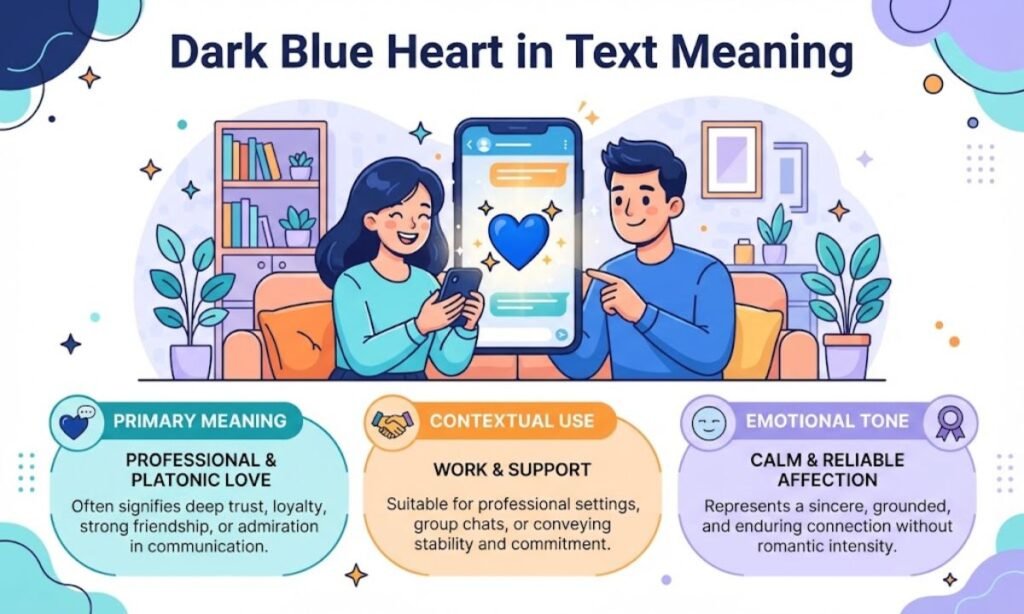
A darker blue heart, sometimes rendered as navy in certain apps, tends to feel more serious and mature compared to lighter shades. It’s often used to express deeper trust or a more grounded, long-term kind of loyalty rather than something lighthearted or fleeting.
Conclusion
The blue heart has grown into one of the most versatile symbols in digital conversation. It leans toward trust, loyalty, and calm affection far more than romance, making it a safe and warm choice across friendships, family chats, and fandoms.
Still, context always matters more than the emoji itself. Paying attention to who sends it, when, and alongside what words will always give you the clearest answer to what a blue heart really means.
Frequently Asked Questions
What does a blue heart emoji symbolize in social media messaging?
It typically symbolizes trust, loyalty, and calm platonic affection, and is often used to show support for friends, causes, or fan communities.
How do popular messaging apps interpret the blue heart emoji?
Apps like WhatsApp, Instagram, and iMessage don’t assign an official meaning; interpretation depends entirely on the conversation and relationship between users.
When is it appropriate to send a blue heart in a text?
It’s appropriate when expressing friendship, gratitude, or steady support, but it’s best avoided in formal settings or as a first romantic gesture.
Which companies use the blue heart emoji in their marketing campaigns?
Brands tied to blue color schemes, along with causes like autism awareness and mental health support, frequently use the blue heart in campaigns and social posts.
Where can I find merchandise featuring the blue heart symbol?
Blue heart merchandise is commonly found on print-on-demand sites, fan community stores, and awareness campaign shops that sell branded apparel and accessories.
How to use the blue heart in digital communication?
Use it to express sincere, low-pressure appreciation or loyalty, ideally in casual or personal conversations rather than formal ones.
What is the blue heart emoji meaning in professional texting platforms?
In professional settings, it generally reads as friendly and appropriate, signaling warmth or appreciation without romantic implication.

I am a dedicated author with 6+ years of experience writing and researching content for name meaning websites. My expertise includes American names, baby names, surnames, name origins, and cultural significance. I focus on creating accurate, well researched, and easy to read articles using trusted sources. My goal is to help readers discover the history, meaning, and uniqueness behind every name with reliable and engaging content.