
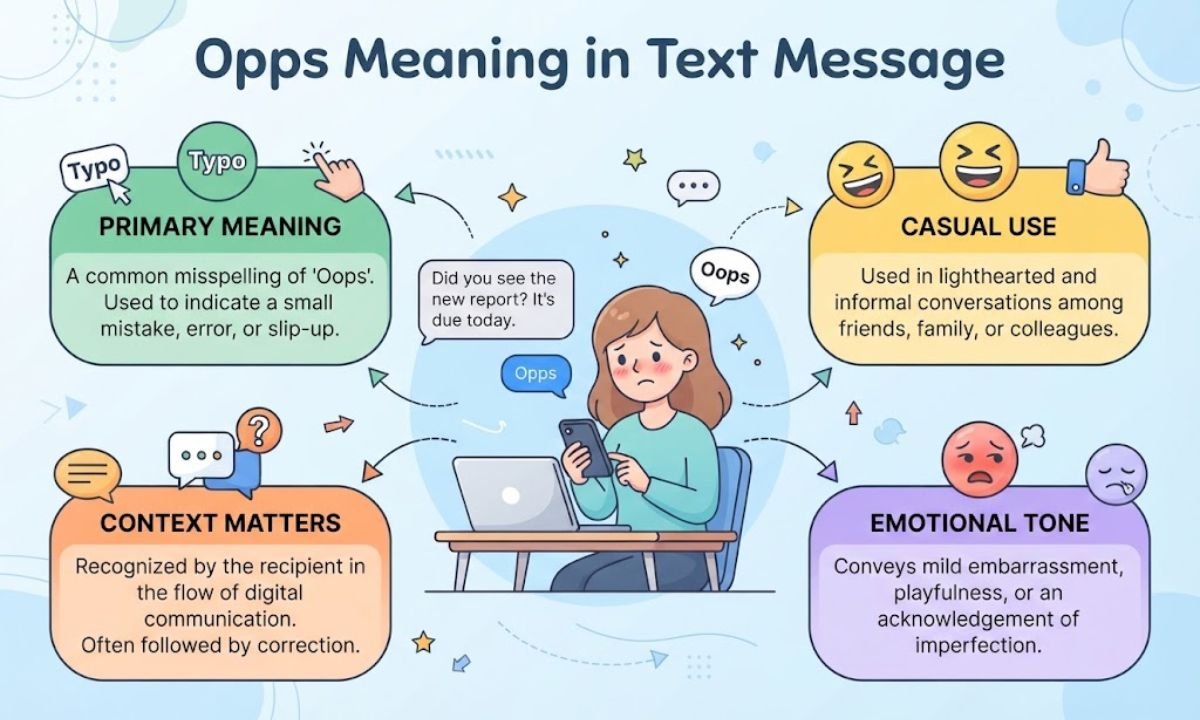

If you’ve scrolled through a group chat, a TikTok comment section, or an Instagram caption lately, there’s a good chance you’ve run into the word “opps.” It shows up in playful jokes between friends, in serious warnings, and in rap lyrics that get quoted everywhere.
For a three-letter word, it carries a lot of weight, and that’s exactly why so many people stop and ask what it actually means.
This guide breaks the word down completely. You’ll learn where it started, how it spread, what it means in different situations, and how to use it (or avoid it) the right way. By the end, you’ll never have to second-guess a text that says “watch out for the opps” again.
What Does Opps Mean in a Text Message?
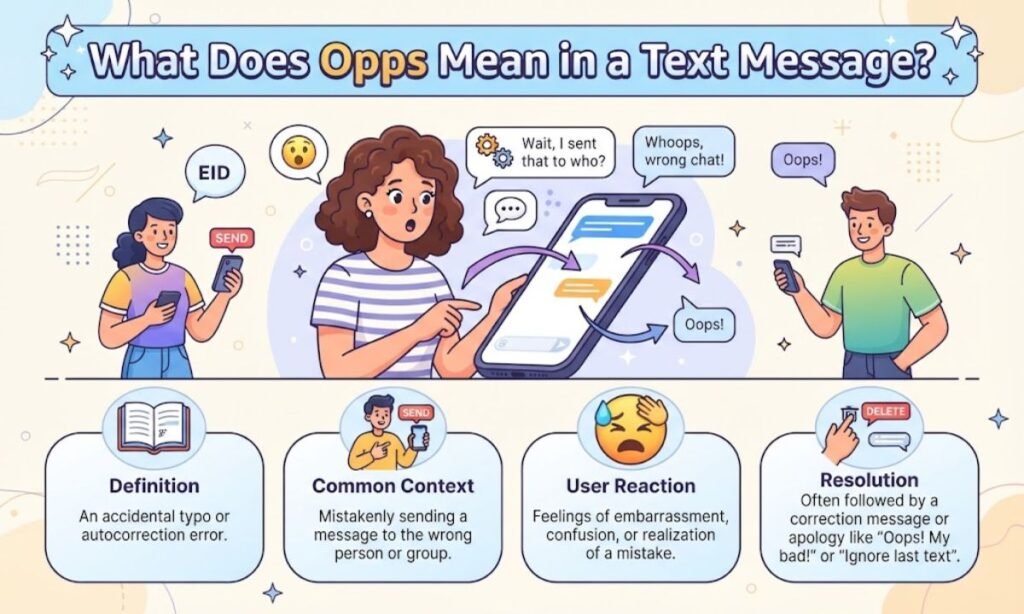
In a text message, “opps” almost always refers to enemies, rivals, or people who are against you. It’s short for “opposition” or “opponents,” and it gets used whenever someone wants to talk about people on the other side of a conflict, a rivalry, or even harmless competition.
The tone depends entirely on who’s texting and why. A message like “the opps are talking again” between two close friends is usually a joke about a rival friend group or a petty disagreement.
The same word in a more serious conversation can point to real animosity or danger. Reading the room matters more than the word itself.
Opps Meaning in Text Message – Quick Meaning
Here’s the shortest possible answer, if you just need the basics:
| Term | Meaning |
| Opp | One enemy, rival, or opponent |
| Opps | More than one enemy, rival, or opposing group |
| Tone | Ranges from playful to genuinely hostile |
| Common on | TikTok, Instagram, X, group chats, gaming lobbies |
| Origin | Hip-hop and street culture slang |
Opp vs. Opps
“Opp” is the singular form, used for one specific person: “He’s an opp.” “Opps” is the plural, used for a group or a general category of rivals: “Those opps never learn.”
People also shorten it further to “op” in fast-moving chats, though that spelling can be confused with unrelated internet terms like “OP” for “original poster.”
The grammar is simple once you see it in action:
- Singular: “That guy is an opp.”
- Plural: “Their whole squad is opps.”
- Possessive-style phrase: “My opp keeps texting my friends.”
The distinction matters more than it looks at first glance. Mixing up singular and plural can change the whole feel of a sentence, since calling out “an opp” sounds targeted and personal, while “opps” sounds broader and more general.
Native slang users tend to switch between the two naturally based on how many people they’re actually talking about, without thinking twice about the grammar behind it.
It also helps to remember that both forms follow regular English pluralization rules, even though the word itself is slang.
There’s no irregular spelling to memorize, no apostrophe needed, and no special rule beyond adding an “s” for more than one. That simplicity is part of why the word spread so quickly and why it fits so easily into fast-paced texting.
Origin and Background of Opps
The word traces back to African American Vernacular English (AAVE), where it developed as a shortened form of “opposition” or “opponent.”
It moved from everyday speech into hip-hop, particularly in drill and trap music, where artists used it to describe rival crews, gangs, or people they were feuding with publicly.
From there, the term did what a lot of music slang does: it left the studio and entered daily conversation.
Fans repeated lyrics, quoted them in captions, and eventually started applying the word to their own lives, even when the “rivalry” was nothing more serious than a disagreement at school or a joke between roommates.
From Serious Rivalry to Everyday Humor
In its earliest and most literal use, “opps” described real, sometimes dangerous conflict between individuals or groups. Over time, as the word spread beyond the communities that coined it, the stakes attached to it dropped for most casual users. Today, a huge share of “opps” texts are jokes, not threats.
This shift is common with slang that starts in a specific subculture and then goes mainstream. The word keeps its shape, but the emotional weight behind it becomes lighter and more flexible depending on who is using it.
Linguists have noted similar patterns with other words that begin in music or subcultural communities and later diffuse into general youth slang.
As a term spreads further from its original context, it typically loses some of its original intensity, since new users borrow the sound and feel of the word without carrying over every layer of its original meaning.
“Opps” fits this pattern closely, which is part of why the exact same word can mean something dead serious in one conversation and something completely lighthearted in another.
This is also why context clues, like tone of voice, emojis, or the seriousness of the surrounding conversation, matter so much when reading a text that uses the word. Two people can use the identical sentence and mean two very different things.
Social Media Expanded the Meaning
Short-form video platforms accelerated the word’s spread more than almost any other channel. Captions like “POV: you spot your opp at the mall” turned a once-heavy term into a meme format that almost anyone could use, regardless of background.
That repetition across TikTok, Instagram Reels, and X normalized the word for a much wider audience, especially younger users who picked it up from trends rather than from the original hip-hop context.
Comment sections played a particularly large role in this spread. Once a handful of viral posts used “opps” as a punchline, thousands of copycat comments followed, each one reinforcing the joke format and making the word feel like a built-in feature of internet humor rather than a borrowed phrase from music culture.
Algorithms rewarded that repetition by pushing similar content to more feeds, which only sped up the process.
By the time the word reached casual daily conversation, most people encountering it had never heard the original song or lyric that popularized it. They simply absorbed it the way slang usually spreads now: through repeated exposure on a screen rather than through direct cultural context.
Real-Life Conversations Using Opps
Seeing the word in context makes it far easier to understand than any dictionary definition. Below are a few realistic scenarios showing how “opps” shifts tone depending on the platform and the relationship between the people texting.
WhatsApp: Friend Group Drama
Friend A: “Did you see what she posted about our group chat?” Friend B: “Yeah, she’s acting like a whole opp right now.” Friend A: “Facts. We’re not inviting her to the trip.”
Here, “opp” is used loosely to describe someone who briefly acted against the group’s interest. Nobody is in real danger; it’s social shorthand for “she’s not on our side right now.”
This kind of exchange is extremely common in group chats among teens and young adults, where minor social slights, like posting something slightly shady or excluding someone from an inside joke, get labeled with dramatic language for comedic effect.
The exaggeration is part of the fun. Everyone involved usually understands that “opp” here means “annoying right now,” not “genuinely dangerous.”
Instagram DMs: Playful Flirting
Person A: “Why do you keep liking my opp’s photos lol” Person B: “Relax, it’s not that deep.”
In a flirty or joking context, calling someone an “opp” can be a lighthearted way to express mock jealousy, not genuine hostility.
This use often overlaps with playful teasing common in early dating conversations, where exaggerated jealousy is treated as a joke rather than a real accusation.
Calling a mutual follower “the opp” in this setting is closer to flirtatious banter than an actual warning, and both people usually recognize it as a bit rather than a serious complaint.
TikTok Comments
“POV: your opps found out you got promoted before them 💀”
This kind of comment treats “opps” as comedic shorthand for haters or doubters, used purely for humor and relatability rather than any real conflict.
These kinds of comments thrive because they’re relatable across almost any topic, from career wins to weight loss progress to relationship milestones.
Viewers recognize the format instantly, which is part of why “opps” jokes tend to get repeated in nearly identical phrasing across thousands of unrelated videos and comment sections.
Text Message: More Serious Context
“Stay low tonight, opps have been around the block.”
This example carries a heavier, more literal tone, closer to the word’s original meaning: a genuine warning about people who pose a real threat. Context clues like location references or urgency usually signal this more serious use.
In cases like this, the surrounding wording tends to be more direct and less playful. There’s usually no joke format, no meme phrasing, and no lighthearted emoji attached.
If a text using “opps” feels tense, specific, and urgent rather than casual, it’s worth taking that shift in tone seriously rather than assuming it’s just slang for fun.
Emotional and Psychological Meaning of Opps
Slang doesn’t just describe situations; it shapes how people feel about them. “Opps” carries a few recurring emotional functions beyond its literal definition.
It Can Communicate Distrust
Calling someone an “opp,” even jokingly, signals a level of distance or suspicion. It draws a line between “us” and “them,” even in low-stakes situations like friend group disagreements.
Even in its most playful form, the word carries a small trace of “watch out for this person.” That built-in wariness is part of what makes it different from purely affectionate slang.
It marks someone, even briefly, as being on the outside of trust, which is why it can sting a little more than other joking insults if it’s aimed at someone unexpectedly.
It Can Turn Tiny Conflicts Into Comedy
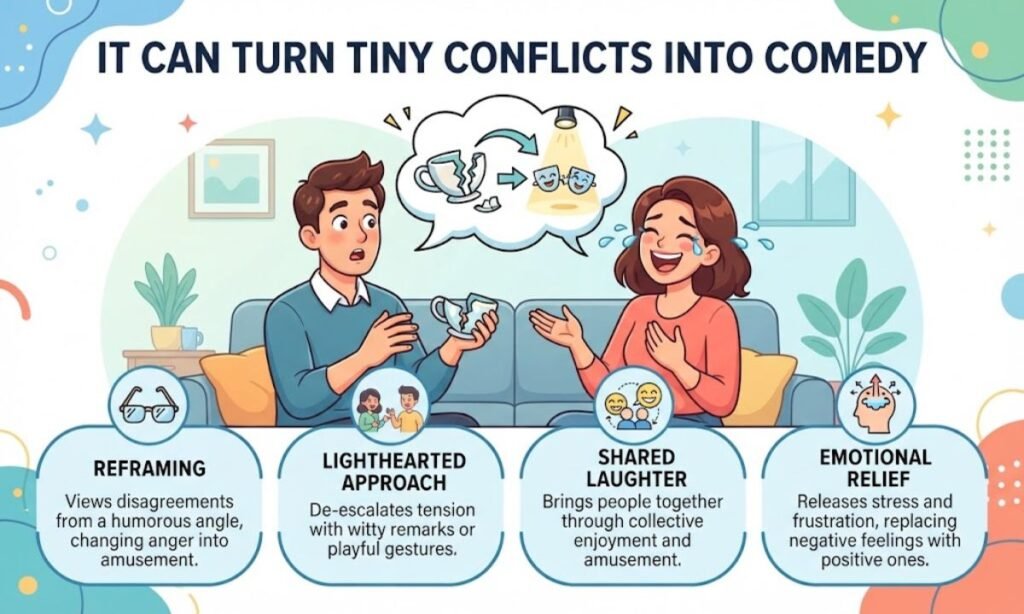
Labeling a minor annoyance as an “opp situation” often defuses tension rather than escalating it. Turning a small disagreement into a meme-style joke is a coping mechanism many younger texters use instinctively.
By exaggerating a small conflict into dramatic, movie-villain language, the situation instantly becomes easier to laugh about. Instead of dwelling on genuine irritation, the group gets to bond over a shared joke, which often ends the disagreement faster than a serious conversation would.
It Can Reveal Group Loyalty
Referring to “our opps” reinforces a sense of belonging. It tells the listener who is inside the circle and who isn’t, which is part of why the word spreads so easily through tight-knit friend groups and online communities.
Shared language like this strengthens group identity in a small but real way. When everyone in a friend group agrees on who counts as “our opps,” it becomes an inside reference that outsiders don’t fully understand, which naturally makes the group feel closer and more exclusive.
Opps Meaning in Different Contexts
The meaning of “opps” shifts noticeably depending on where it’s used. Here’s a breakdown of the most common settings.
Opps on Social Media
On platforms like TikTok and Instagram, “opps” is mostly comedic. It shows up in captions, memes, and comment sections as a catch-all term for rivals, haters, or people who are “against” the poster in some exaggerated way.
It’s common to see the word attached to trending formats, like “getting ready to face the opps” videos or reaction clips where someone dramatically prepares for a minor confrontation. These formats rely on the gap between the dramatic language and the mundane situation for comedic effect, and that gap is exactly what makes them shareable.
Opps Between Friends
Among friends, “opps” is usually a joke about petty rivalries, like a friend group that always loses at trivia night or someone who always disagrees just to be difficult.
Friend groups often develop their own running jokes around the word, assigning “opp” status to whichever friend forgot to pay them back, showed up late again, or lost a bet. It becomes a shared bit rather than a genuine insult, reused so often that it loses any real sting.
Opps in Dating and Relationships
In dating contexts, the term can point to an ex, a rival love interest, or anyone perceived as competition. It’s typically used half-seriously, more about drama and banter than actual hostility.
This use often shows up in group chats where friends are helping someone navigate a new relationship, joking about “handling the opp” if an ex resurfaces or a rival admirer starts liking old photos. It’s treated as light relationship gossip rather than an actual declaration of conflict.
Opps in Gaming
Gamers frequently use “opp” or “opps” to describe the opposing team, especially in competitive shooters and team-based games. Here, the word is close to neutral, functioning almost like a synonym for “the enemy team.”
In voice chats and gaming Discord servers, callouts like “opps pushing left side” or “watch the opp in the corner” function as quick, practical communication rather than emotional language. This is one of the few contexts where the word carries almost no hostility at all, since it’s simply describing the other team’s position during a match.
Opps in Serious Conflict
In contexts tied to real-world rivalries, particularly some drill and street culture references, “opps” retains its original, heavier meaning: people involved in genuine, sometimes dangerous conflict.
This usage is far less common in everyday texting than the playful version, but it’s the one that gave the word its cultural weight in the first place. Recognizing when a conversation has shifted into this more serious territory is important, since responding with a joke in that context can badly misread the situation.
When NOT to Use Opps
Slang has a place, and “opps” is no exception. Here’s where it’s best avoided.
Formal Communication
Emails to a manager, official messages, or client communication are not the place for slang like this. It reads as unprofessional and can create confusion.
Even in workplaces with a casual culture, slang tied to conflict language can come across as odd or unclear in writing that might be forwarded, archived, or read by someone outside the original conversation. Sticking to plain, direct wording is always the safer choice in professional settings.
Academic Writing
Essays, reports, and classroom assignments call for standard vocabulary. “Opps” has no place in formal academic tone.
If a topic calls for discussing rivalry, conflict, or opposition in an academic paper, standard words like “opponent,” “rival,” or “adversary” communicate the same idea without pulling casual internet slang into formal writing.
Serious Disagreements
If a conflict is genuinely serious, using slang can trivialize it or come across as dismissive, even if that isn’t the intent.
When emotions are running high, casual phrasing can accidentally minimize how someone else is feeling, even if the person using it meant no harm. Choosing clearer, more direct language usually helps a serious conversation move toward resolution rather than confusion.
With People Unfamiliar With the Slang
Using “opps” with someone who doesn’t know the term, like an older relative or a coworker outside your social circle, often leads to confusion rather than the intended humor or shorthand.
In these situations, the joke usually falls flat, and the listener may take the word far more literally and seriously than intended. A quick explanation, or simply choosing more familiar wording, avoids unnecessary confusion or unintended alarm.
Common Misunderstandings About Opps
A few mix-ups come up again and again, so it’s worth clearing them up directly.
Opps vs. Oops
These two words look and sound similar but mean completely different things. “Oops” is an exclamation used after a small mistake. “Opps” refers to enemies or rivals. Autocorrect occasionally swaps one for the other, which is where a lot of the confusion starts.
Because the two words are only a letter apart and both are extremely common in texting, it’s easy to misread one for the other at a glance, especially in a fast-scrolling feed. Paying attention to the surrounding sentence almost always clears up which word was actually intended.
Does Opp Mean Police?
No. “Opp” does not mean police. It refers to opponents or enemies, not law enforcement. The confusion likely comes from other, unrelated slang terms used for police in some communities.
It’s worth separating the two clearly: words used to reference law enforcement in street slang are a completely different category of vocabulary, with their own separate history and meaning, and shouldn’t be assumed to overlap with “opp” just because both are informal terms.
Does Opp Mean Enemy?
Yes, this is the closest one-word definition. “Opp” is essentially a casual, modern synonym for “enemy” or “rival,” though the intensity of that meaning changes based on context.
Think of it as a flexible label rather than a fixed one. The same word can describe a genuine threat in one conversation and a harmless rival in a video game lobby in the next, which is exactly why context does most of the heavy lifting when it comes to understanding the term correctly.
Is Opp Always Gang Slang?
No. While the term has roots that overlap with street and gang culture, especially in some music genres, its everyday use today is overwhelmingly casual and applies to friend group drama, sports rivalries, and online banter.
Most people using the word in 2026 have no connection to its original, heavier context at all. They picked it up from a meme, a song, or a friend’s caption, and use it the same way they’d use any other exaggerated internet slang for comedic effect.
Opps Compared With Similar Slang
Several related terms get confused with “opps,” so a side-by-side comparison helps clarify the differences.
| Term | Meaning | Typical Tone |
| Opp(s) | Enemy, rival, or opposing group | Playful to serious |
| Hater | Someone who criticizes or resents your success | Mostly casual |
| Beef | An ongoing conflict or disagreement | Casual to serious |
| Op (forum slang) | “Original poster” of a thread or post | Neutral |
| OPP (1991 song) | Reference to “Other People’s Property” | Historical/cultural |
Key Insight
The biggest difference between “opps” and words like “hater” is intensity. “Hater” usually implies jealousy without real conflict, while “opps” implies an actual opposing side, even if that opposition is exaggerated for comedic effect.
10 Common Variations and Types of Opps
Slang rarely stays in one fixed form. Here are ten common ways people phrase and use the word.
1. Opp
The base singular form, referring to one specific rival.
2. Opps
The plural form, used for multiple rivals or a general category of enemies.
3. The Opps
Adding “the” makes it sound more collective, often referring to a specific rival group everyone in the conversation already knows about.
4. My Opp
A more personal version, pointing to someone with a specific grudge or rivalry against the speaker.
5. Certified Opp
An exaggerated, meme-style phrase used to comedically confirm someone’s status as a rival or hater.
6. Secret Opp
Refers to someone pretending to be a friend while secretly acting against someone’s interests.
7. Opp Behavior
Describes an action that seems disloyal, petty, or hostile, regardless of who did it.
8. Moving Like an Opp
A phrase describing suspicious or untrustworthy behavior, often used jokingly among friends.
9. The Opps Are Watching
A humorous warning phrase, usually implying that rivals or critics are paying close attention.
10. Became an Opp
Describes someone who used to be a friend or ally but has since switched sides or caused a falling-out.
How to Respond When Someone Says Opps
Reacting to the word well depends on the tone of the conversation. Here are a few directions to take.
Casual Replies
- “Lol true, they’ve been acting up.”
- “Not the opps again.”
Funny Replies
- “Someone alert the opp headquarters.”
- “I’ll add them to the opp list.”
Mature Replies
- “Honestly, I don’t think they mean any harm.”
- “Let’s not make this bigger than it is.”
Respectful Replies
- “I hear you, but let’s talk it out instead.”
- “I get why you feel that way.”
Regional and Cultural Usage of Opps
The word’s popularity isn’t evenly spread. Different regions and generations use it in noticeably different ways.
Western Internet Culture
In the US and UK, “opps” is deeply tied to hip-hop, drill music, and mainstream meme culture, making it one of the most recognizable slang terms among younger internet users.
Asian Online Culture
In many Asian online spaces, the term has been adopted mostly through exposure to Western music and social media trends, often used in a lighter, more playful sense than its original context.
Middle Eastern Online Culture
Younger users across Middle Eastern social media have picked up the word largely through global platforms like TikTok, typically applying it to friendly rivalries rather than serious conflict.
Global Internet Usage
Because platforms like TikTok and Instagram operate worldwide, “opps” has become one of those slang terms that crosses language barriers, often mixed into conversations that are otherwise in a completely different language.
Gen Z vs. Millennials
Gen Z tends to use “opps” constantly and casually, often as a joke. Millennials are generally familiar with the term through music but use it far less often in daily conversation, and usage tends to skew more literal when they do.
Is Opps Safe for Kids?
For the most part, “opps” is harmless slang when used the way most teens and young adults use it: as a joke about petty rivalries or friend group drama. It becomes a bigger concern only when the context suggests real hostility, threats, or ties to actual conflict rather than playful banter.
Parents and guardians don’t need to panic over the word itself. What matters more is the surrounding context of the conversation, the tone, and whether the situation described sounds like genuine harmless joking or something that warrants a closer look.
Does Opps Mean Cops?
No. “Opps” does not mean police or cops. It refers to enemies, rivals, or opposition. This mix-up sometimes happens because of other, unrelated regional slang terms for law enforcement.
Opps Meaning Slang Instagram
On Instagram, “opps” usually appears in captions, story replies, and comments as a lighthearted way to reference rivals, haters, or comedic “enemies,” almost always without any real hostility behind it.
What Does Opps Mean in Healthcare?
Outside of slang, “OPPS” is also a well-known healthcare acronym: the Outpatient Prospective Payment System, a Medicare reimbursement system used for hospital outpatient services in the United States. This is a completely separate meaning from the slang term and depends entirely on context.
Opp Meaning TikTok
On TikTok, “opp” is a staple of meme culture, showing up in captions and comment sections to describe rivals, doubters, or comedic “enemies” in everyday situations, from sports to school to relationships.
Opps Slang Origin
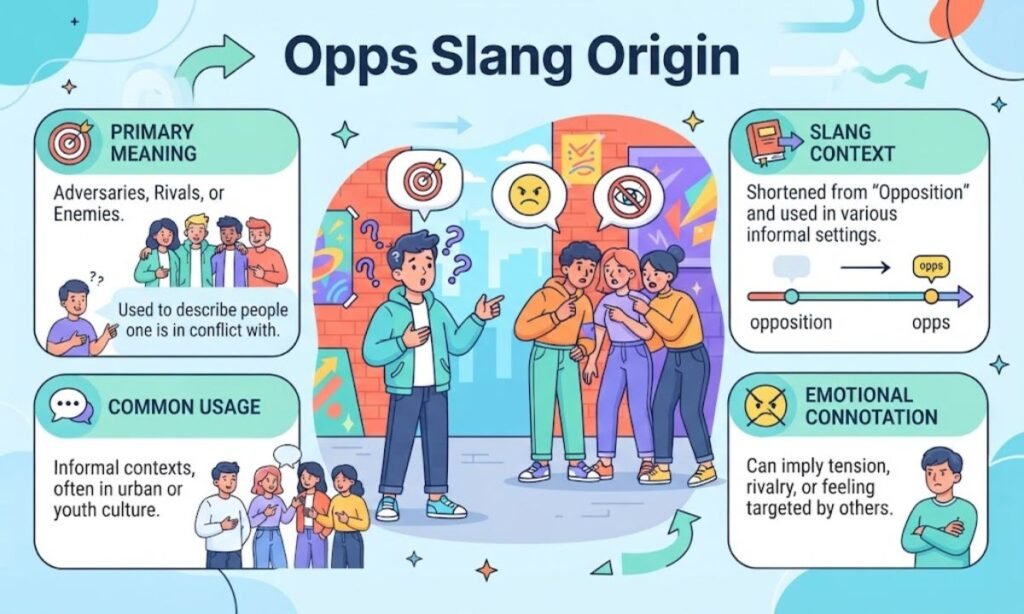
As covered earlier, the term originated in African American Vernacular English as shorthand for “opposition,” later gaining wide use in hip-hop and street culture before spreading into mainstream internet slang.
Opps Pronunciation
“Opps” is pronounced simply as “ops,” rhyming with “stops” or “shops.” It is not pronounced like “oops,” which is a common point of confusion for people encountering the word for the first time.
Conclusion
At its core, “opps” is just modern slang for enemies or rivals. It can be a lighthearted joke between friends or a serious warning depending entirely on the situation and the people involved.
Understanding the word means paying attention to tone, platform, and relationship, not just the letters on the screen. Once you know the context clues, “opps” becomes easy to read and even easier to use correctly.
Frequently Asked Questions
What does “opps” mean in a text message?
“Opps” means enemies, rivals, or people on the opposing side of a conflict or rivalry, ranging from playful to serious depending on context.
What does opps signify in a casual text?
In a casual text, “opps” usually signals a joking reference to petty rivalries, like friend group drama or harmless competition.
Is “opps” used differently on social media platforms?
Yes, on platforms like TikTok and Instagram it’s typically comedic and meme-driven, while in direct messages or serious conversations it can carry more weight.
How do popular messaging apps interpret “opps”?
Messaging apps don’t assign their own meaning to the word; interpretation depends entirely on the conversation and relationship between the people texting, not the platform itself.
How is opps used in instant messaging?
In instant messaging, “opps” is typically shorthand for rivals or enemies, used in quick, casual exchanges between friends or acquaintances.
Can “opps” be an abbreviation for business terms in texts?
Generally no in casual texting, though “OPPS” is a recognized acronym in healthcare billing (Outpatient Prospective Payment System), a completely unrelated meaning.
Is opps a recognized internet abbreviation?
Yes, it’s widely recognized across social media and messaging as slang for opponents or enemies, especially among younger internet users.
Which brands use “opps” as slang in their marketing campaigns?
Some youth-focused and streetwear brands have used “opp” culture references in casual, meme-style marketing, though usage varies and works best when it matches the brand’s existing tone and audience.

I am a dedicated author with 6+ years of experience writing and researching content for name meaning websites. My expertise includes American names, baby names, surnames, name origins, and cultural significance. I focus on creating accurate, well researched, and easy to read articles using trusted sources. My goal is to help readers discover the history, meaning, and uniqueness behind every name with reliable and engaging content.