

Someone texts you “watch out, the ops are here” and your brain stalls. Is this a joke? A warning? Something about baseball? Three letters, and suddenly you’re decoding a message instead of reading it.
You’re not slow. “OPS” is one of those rare slang terms that carries a completely different meaning depending on who typed it and where. A teenager on TikTok means one thing. Your manager in a Slack channel means something else entirely. A sports fan means a batting statistic.
This guide clears all of it up. You’ll learn what OPS stands for, where it came from, how it sounds in real conversations, when it’s funny, when it’s a red flag, and how to reply without looking lost.
What Does OPS Mean In Text?
In text messages and on social media, OPS usually means “opposition” — your rivals, enemies, or the people you’re not on good terms with. It’s the plural of “opp,” short for opponent.
The tone ranges wildly. Between close friends, calling someone an “op” is often a joke. In street or gang contexts, it’s serious and can point to real conflict.
Spelling matters here. Most people write it as “opps” with two Ps when they mean enemies. “Ops” with one P more often means operations, or it’s just a typo for “oops.”
Context does the heavy lifting. A gaming chat, a group chat, and a company Slack will each pull the word in a different direction.
OPS In Text Meaning – Quick Meaning
Here’s the fast version if you just need an answer and want to get back to your chat.
| Spelling | Most Likely Meaning | Typical Setting | Tone |
| opps | Enemies, rivals, opposition | Texting, TikTok, Instagram | Serious or playful |
| opp | One enemy or rival (singular) | Texting, comments | Serious or playful |
| ops | Operations (business, military, tech) | Slack, email, LinkedIn | Neutral, professional |
| ops | Typo or shorthand for “oops” | Casual texting | Light, apologetic |
| OPS | On-base Plus Slugging | Baseball talk, sports apps | Statistical |
| OP | Original Poster or Overpowered | Reddit, forums, gaming | Neutral |
The short answer: if a friend, teen, or social media caption uses it, read it as enemies. If a coworker uses it, read it as operations.
Origin And Background Of OPS
The slang meaning didn’t appear overnight. It grew out of a specific community, moved through music, and then got flattened into an everyday joke by the internet.
Understanding that path explains why the same word can feel threatening in one chat and harmless in another.
From Opponent to “Opp”
The root word is simply “opponent” or “opposition.” English speakers have clipped long words for centuries, and this one got clipped early.
The shortened form took hold in African American Vernacular English, where it described people from a rival crew, block, or neighborhood. It wasn’t casual language — it marked a real line between groups.
“Opp” referred to one person. “Opps” covered the whole other side. That singular-plural split still holds today, even in playful use.
From there it spread through cities where the term already had weight, then outward to anyone listening to the same music.
Music and Cultural Influence
Drill and trap music carried the word to a mass audience. Through the 2010s, artists in Chicago, Atlanta, London, and elsewhere used “opps” constantly in lyrics.
For listeners inside those communities, the meaning was literal. For millions of listeners outside them, it became vocabulary picked up from songs.
That’s the crucial split. The word traveled far beyond the situations that created it, and the danger it originally implied did not travel with it.
Plenty of teenagers now use “opps” having never been near an actual conflict. They learned it the way earlier generations learned slang from radio.
Social Media Changed the Tone
Once the word hit TikTok, Twitter, and Instagram, it softened fast. Memes reframed “opps” as anyone mildly annoying.
Your sibling who ate the last slice became an op. The friend who beat you at a game became an op. The barista who spelled your name wrong became an op.
This is how slang usually dies of seriousness — repetition turns menace into comedy. Today the humorous version is far more common online than the original.
But the original meaning never disappeared. It just moved to the background, ready to resurface when the context turns real.
Real-Life Conversations Using OPS
Definitions only go so far. Seeing the word inside actual message threads makes the tone much easier to read.
Here are four short examples across the platforms where you’re most likely to run into it.
WhatsApp Conversation
Zara: why is Hamza in the group chat now Ali: he asked to be added Zara: bro he’s literally my op 😭 Ali: you two argued once. in 2023. Zara: and I remember it daily
Notice the crying-laughing emoji and the absurd reason. Everything here signals joke, not threat.
Instagram DM
User 1: saw your story at the match User 2: yeah we went last minute User 1: wait were you sitting with the opps 👀 User 2: they’re not opps they’re my cousins 💀
Here “opps” means supporters of a rival team. Sports rivalry is one of the safest, most common uses of the word.
TikTok Comments
@ehsan.k: the way you edited this is insane @mariyam: fr the opps could never @ehsan.k: 😭 who are the opps @mariyam: everyone who posted a worse version
“The opps could never” is practically a stock phrase now. It means “no one else can do this as well.” It’s bragging, not hostility.
Text Message
Mom: who is coming to dinner Teen: just Bilal Mom: not the other boy? Teen: he’s an op now 😭 Mom: what does that mean, should I be worried
That last line is the reason this article exists. A parent reading “op” cold has no way to judge the tone.
Emotional and Psychological Meaning of OPS
Slang isn’t only about definitions. Words like this do social work — they draw lines between “us” and “them,” and they let people express irritation without saying anything heavy.
That emotional layer is what makes the word stick around.
Why People Use It Humorously
Calling someone an op is a low-effort way to express annoyance. It’s dramatic, so it’s obviously exaggerated, which makes it safe.
Saying “I’m frustrated with you” is vulnerable. Saying “you’re my op” gets the same idea across wrapped in comedy.
It also creates instant belonging. If two friends agree on who the “opps” are, they’ve reinforced that they’re on the same team.
Teenagers especially use this kind of playful antagonism to build closeness. The insult is the affection.
When the Meaning Becomes Serious
The humor disappears when the word points at a real conflict. In those cases it can signal ongoing tension, threats, or a dispute that has escalated beyond words.
Warning signs include: no emojis, no laughing tone, repeated mentions of the same people, references to locations, or anything suggesting fear or planned confrontation.
If a young person uses it that way, it’s worth a calm conversation rather than a lecture. Asking “who do you mean?” usually reveals the tone within a sentence or two.
The word itself isn’t the problem. The situation behind it might be.
A Relatable Scenario
Imagine a group project at university. One student keeps missing meetings, then presents the work as mostly their own.
Afterward, in the group chat, someone types: “she’s officially an op.” Everyone laughs, someone adds a skull emoji, and the conversation moves on.
Nothing dangerous happened. A word borrowed from street slang absorbed a very ordinary frustration about coursework.
That’s the modern life of this term in a single example.
OPS Meaning in Different Contexts
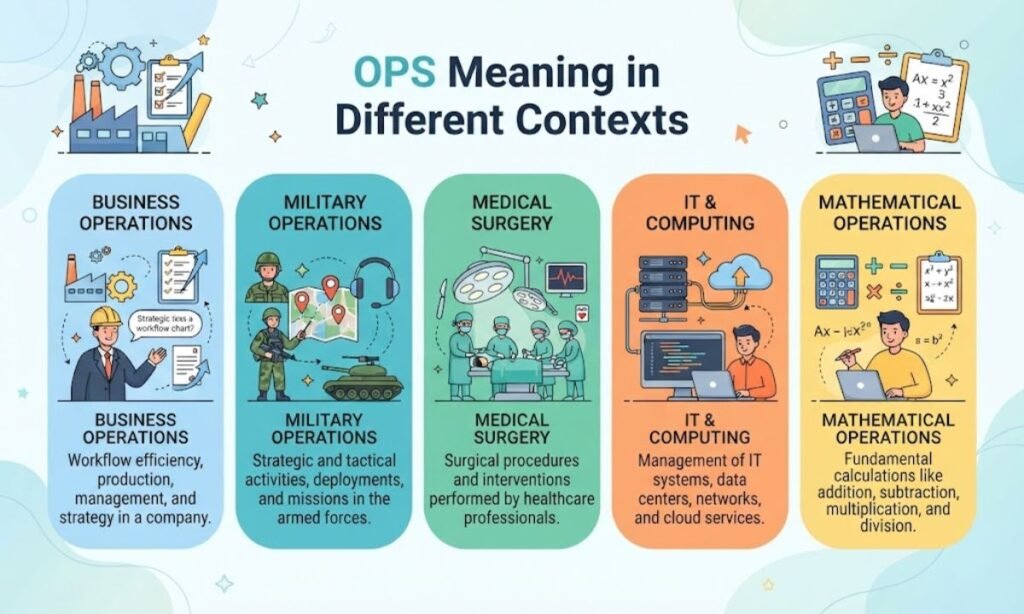
The same three letters shift meaning across platforms and settings. Here’s how to read each one.
OPS on TikTok and Instagram
On short-video platforms, “opps” almost always means haters, rival creators, or unnamed people the poster wants to outshine.
Common captions include “opps watching this 💀” and “this one’s for the opps.” It’s performance, not accusation.
It’s also a way to imply you have an audience of critics — which is a subtle flex about being noticed at all.
OPS Between Friends
Among friends, an “op” is whoever is currently being teased. Status is temporary and rotates constantly.
You can be an op for finishing someone’s snacks, picking the wrong film, or winning too many rounds of a game.
The word here functions like a nickname. Nobody means it, and everyone knows nobody means it.
OPS in Gaming
In games, “ops” naturally means the enemy team. Voice chat lines like “opps are pushing mid” use it as plain tactical vocabulary.
Careful though — in gaming, “OP” with no S usually means overpowered, describing a weapon or character that’s unfairly strong.
“That gun is OP” and “the opps are on B site” are two entirely different statements. One S changes everything.
OPS in Relationships
In dating contexts, the word usually refers to an ex, a rival for someone’s attention, or a friend who’s taking sides in a breakup.
“My ex is my op now” is mostly humor with a real sting underneath. It signals that things ended badly without spelling out why.
Some couples also joke about each other as ops during arguments over small things, which is a way of defusing tension.
OPS in Work and Professional Settings
At work, drop the slang reading entirely. “Ops” means operations — the team or function that keeps the business running day to day.
You’ll see it in phrases like “ops team,” “ops review,” “DevOps,” “RevOps,” and “ops headcount.” None of it has anything to do with enemies.
If a colleague writes “looping in ops,” they mean a department. Reading it as slang would be a genuinely awkward mistake.
When NOT to Use OPS
Slang has a time and place. This one has more restrictions than most, because its origins carry real weight.
Avoid using it in these situations:
- In professional communication. Emails, client calls, and interviews are not the place. It reads as unserious.
- With people much older than you. They’ll either misread it as a threat or ask you to explain, which kills the joke.
- About real conflicts. Using conflict slang to describe an actual dispute can escalate it.
- When you don’t know the context. If you’re unfamiliar with the community the word came from, using it casually can come across as borrowed and hollow.
- In school assignments or public posts tied to your name. Screenshots outlive jokes.
- About someone who isn’t in on it. Playful antagonism only works when both people know it’s play.
The general rule: use it with friends who already use it, and nowhere else.
Common Misunderstandings About OPS
Most confusion around this term comes from four specific mix-ups. Clearing them up prevents nearly every misread.
“Ops” Does Not Always Mean Enemies
Plenty of times, “ops” is just operations — or someone’s fingers slipping while typing “oops.”
If your coworker writes “ops, wrong file,” that’s a typo and an apology. Nothing more.
Check the sentence around it before assuming any social meaning.
“Opp” Does Not Always Mean a Dangerous Rival
The word covers an enormous range, from deadly serious to completely trivial. Most modern uses sit at the trivial end.
Someone who lost a video game, forgot to reply, or supported the wrong football club can all be called an op.
Assume the light meaning first unless the tone clearly says otherwise.
Tone Matters
Emojis, punctuation, and surrounding words carry more information than the word itself.
“He’s my op 😭💀” is a joke. “he’s my op.” with a full stop and nothing else is worth a second look.
When in doubt, ask. A simple “wait, seriously?” gets you a straight answer.
Spelling Matters
This is the single most useful thing to remember from this article.
| Written As | Usually Means |
| opp / opps | Enemy or rival (slang) |
| ops | Operations, or a typo for “oops” |
| OP | Original Poster (forums) or Overpowered (gaming) |
| OPS | On-base Plus Slugging (baseball) |
One letter genuinely changes the message. Read carefully before you react.
OPS Compared With Similar Slang
Several terms live in the same neighborhood as “opps.” Knowing the differences helps you pick the right one and read others correctly.
| Term | Meaning | Intensity | Common Setting |
| Opps | Enemies or opposition | Medium to high | Texting, music, social media |
| Haters | People who criticize you | Low | Social media, comments |
| Enemies | Direct, plain adversaries | High | General use |
| Rivals | Competitors, often respected | Low to medium | Sports, work, gaming |
| Beef | An ongoing dispute | Medium to high | Music, social circles |
| Frenemies | Fake friends | Low to medium | Friend groups, school |
| Snakes | Disloyal people close to you | Medium | Friend groups, work |
| Trolls | People stirring drama online | Low | Comment sections |
Key Insight
“Haters” and “trolls” describe people bothered by you. “Opps” describes a mutual standing between two sides.
That mutuality is the whole difference. A hater is a spectator. An op is a participant.
It also explains why “opps” feels heavier — it implies an actual relationship, even a hostile one, rather than random noise from strangers.
10 Variations and Related Meanings of OPS
The term has branched into a small family of related expressions. Here’s what each one means.
1. Opp
The singular form. One rival, one enemy, one person you’re not on good terms with.
Example: “Don’t invite him, he’s an opp.”
2. Opps
The plural. A whole group on the other side — a rival crew, a competing team, or a collection of critics.
Example: “The opps been quiet lately.”
3. Ops
Usually operations in professional contexts, or a simple typo for “oops” in casual ones.
Example: “The ops team handles scheduling.”
4. The Opps
Adding “the” makes it a defined group rather than scattered individuals. Slightly more serious in tone.
Example: “That’s the opps’ side of town.”
5. Certified Opp
A comic intensifier. It means someone has earned op status permanently through repeated behavior.
Example: “He spoiled the finale. Certified opp.”
6. Secret Opp
Someone who acts friendly while working against you. Closest cousin to “snake” or “fake friend.”
Example: “She’s a secret opp, she told everyone.”
7. Opp Behavior
Describes an action rather than a person. Useful for calling out disloyalty without naming anyone.
Example: “Screenshotting the group chat is opp behavior.”
8. Business Ops
Short for business operations. Covers the processes, systems, and people that keep a company running.
Example: “Business ops is reviewing the vendor contracts.”
9. Sales Ops
Sales operations — the team supporting a sales department with data, tools, forecasting, and process.
Example: “Sales ops built the new pipeline dashboard.”
10. SecOps
Security operations. The function responsible for monitoring, detecting, and responding to security threats.
Example: “SecOps flagged unusual login activity overnight.”
Notice the clean split. Items 1 through 7 are slang. Items 8 through 10 are corporate vocabulary that happens to share the same three letters.
How to Respond When Someone Uses OPS
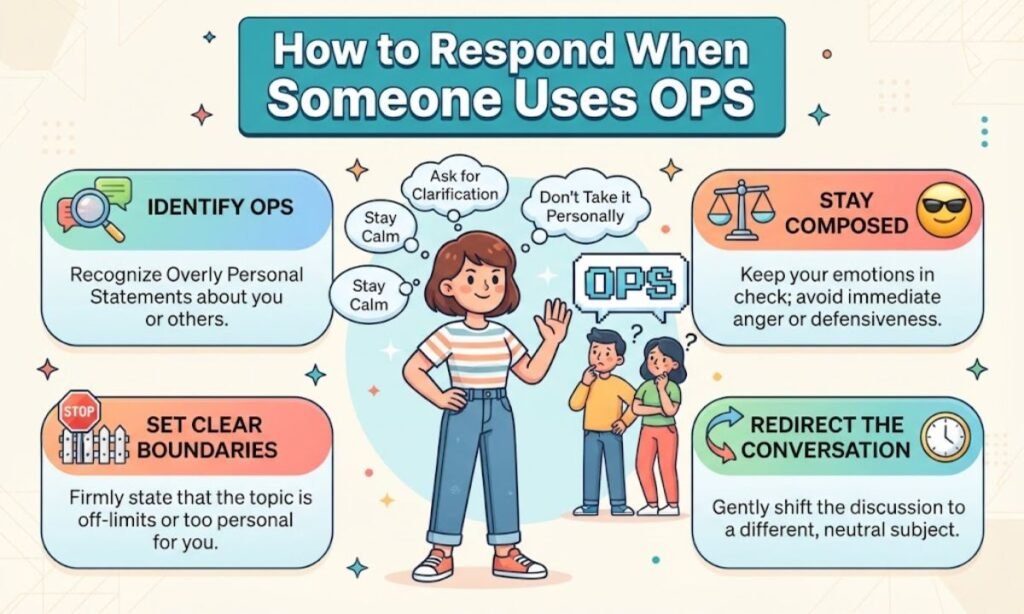
Your reply should match the tone of the message. Here are options across four registers.
Casual Replies
Low effort, keeps the conversation moving, commits to nothing.
- “Since when?”
- “Fair enough.”
- “Who this time 😭”
- “Yeah I heard.”
Funny Replies
Best when the message is clearly a joke and you want to match the energy.
- “Not the opp allegations.”
- “I’ll add him to the list.”
- “Everyone’s an op to you.”
- “Certified opp behavior honestly.”
Mature Replies
Useful when you want to de-escalate or gently question the framing.
- “Are you two actually okay?”
- “That sounds like a misunderstanding.”
- “Might be worth just talking to him.”
- “Is this serious or are we joking?”
Respectful Replies
For situations where you’d rather not engage with the label at all.
- “I’d rather stay out of it.”
- “I’m cool with both of you.”
- “I don’t really see it that way.”
- “Let’s not bring that into the chat.”
Picking the right register matters more than picking the right words. Reading a joke as serious is awkward, but reading a serious message as a joke is worse.
Regional and Cultural Usage of OPS
The word travels, but it doesn’t travel identically. Here’s how it lands in different parts of the world.
Western Culture
In the US and UK, the term is widely understood and heavily used among younger speakers. Drill scenes in both countries kept it in circulation.
Older generations in these countries increasingly recognise it too, mostly through news coverage and their own children.
Asian Culture
Across South and Southeast Asia, “opps” arrived through English-language music, gaming, and social platforms.
It’s used almost entirely in its playful sense. Local speakers often mix it into English-language chats while using native slang for stronger sentiments.
Middle Eastern Culture
Usage is concentrated in English-speaking online spaces and among students exposed to Western media.
It functions more as an imported internet word than a rooted piece of local slang, which keeps its tone light.
Global Internet Culture
Online, the word has become close to universal shorthand for “people on the other side.” Language barriers barely slow it down.
Short-form video is the main engine. A phrase used in a viral clip can spread across a dozen countries in a week.
Gen Z vs. Millennials
The generational split is clear and worth knowing.
| Group | Typical Usage | Tone |
| Gen Z | Frequent, casual, part of everyday speech | Mostly humorous |
| Millennials | Occasional, often ironic or self-aware | Deliberately exaggerated |
| Gen X and older | Rare, usually confused or asking for clarity | Neutral or concerned |
Gen Z uses it without thinking. Millennials use it knowing it’s slightly borrowed. Everyone older mostly asks what it means.
Is OPS Safe for Kids?
The word itself isn’t dangerous. The contexts it sometimes points to can be.
For most children and teenagers, “opps” is harmless playground vocabulary borrowed from music and memes. It sits alongside every other exaggerated insult kids have always used.
Parents should pay attention to the surrounding details rather than the word:
- Usually fine: joking tone, emojis, silly reasons, rotating targets, used about games or sports.
- Worth a conversation: repeated use about the same people, mentions of specific places, secrecy about who’s involved, signs of fear or anger.
A good approach is curiosity instead of alarm. Asking “what does that mean when you say it?” tends to open the conversation. Banning a word usually just moves it out of your hearing.
It’s also worth knowing that most young people using this term have no connection to the environments it came from. Assuming otherwise can damage trust quickly.
Ops On Me Fr Meaning In Text
“Ops on me fr” means “my enemies are genuinely after me” or “I’m really facing opposition right now.” The “fr” stands for “for real,” which adds emphasis.
Most of the time it’s dramatic exaggeration about ordinary problems — a bad day, criticism online, or losing an argument.
Occasionally it’s literal. If someone uses it without humor and follows up with specifics, take it seriously and encourage them to talk to someone they trust.
Ops On Me Meaning In Text
Without the “fr,” the phrase means the same thing with slightly less emphasis: “people are against me.”
It often shows up on anonymous messaging apps, where users post it to attract responses or sympathy.
Read it as venting first. Check the surrounding messages before deciding it’s anything more.
Ops In Text Meaning Urban Dictionary
Crowd-sourced slang dictionaries define “ops” and “opps” as opposition, enemies, or rival groups, with entries dating back over a decade.
Those entries are useful for the core definition but often lean toward the harshest interpretation, since early contributors documented the original street usage.
Treat them as a starting point, not the full picture. They rarely capture how much lighter the word has become in everyday online use.
Ops Or Opps Slang
Both spellings circulate, and people use them interchangeably despite the technical difference.
“Opps” is the standard slang spelling for enemies. “Ops” is more commonly operations — but plenty of people type it with one P out of habit or speed.
When you see “ops” in a casual message with no work context, it almost certainly means the same as “opps.” When you see it in a work channel, it means operations.
Ops Meaning Slang Instagram
On Instagram, “opps” appears mainly in captions, story text, and comment replies. It’s used to reference critics, rival accounts, or people from past drama.
Typical examples: “opps mad,” “posting this for the opps,” or “the opps be watching every story.”
The tone is nearly always performative. It builds a narrative of having rivals, which is a common engagement tactic.
Ops Meaning Slang Snapchat
On Snapchat, usage skews more personal because the audience is usually close friends.
You’ll see it in snap captions about school drama, sports losses, or friendship fallouts. The disappearing nature of the platform makes people slightly bolder with it.
Still overwhelmingly casual. Snapchat “opps” are usually classmates, not genuine adversaries.
OPS Meaning Baseball
In baseball, OPS stands for On-base Plus Slugging — a statistic that adds a player’s on-base percentage to their slugging percentage.
It measures overall offensive value in one number. Higher is better.
As a rough guide: around .700 is average, .800 is very good, and .900 or above is elite territory. It’s now one of the most cited hitting stats in the sport.
This meaning is completely unrelated to the slang. Context makes it obvious — nobody discusses batting averages in a group chat about school drama.
Ops Meaning Gen Z
For Gen Z, “ops” and “opps” have largely lost their edge. The word is now closer to a punchline than an accusation.
It’s applied to anyone who mildly inconveniences you, and status changes by the hour. Someone can be an op at lunch and a best friend by evening.
That said, Gen Z speakers still recognise the serious version. They switch between the two readings effortlessly based on context — which is exactly what confuses everyone else.
Ops Girl Meaning
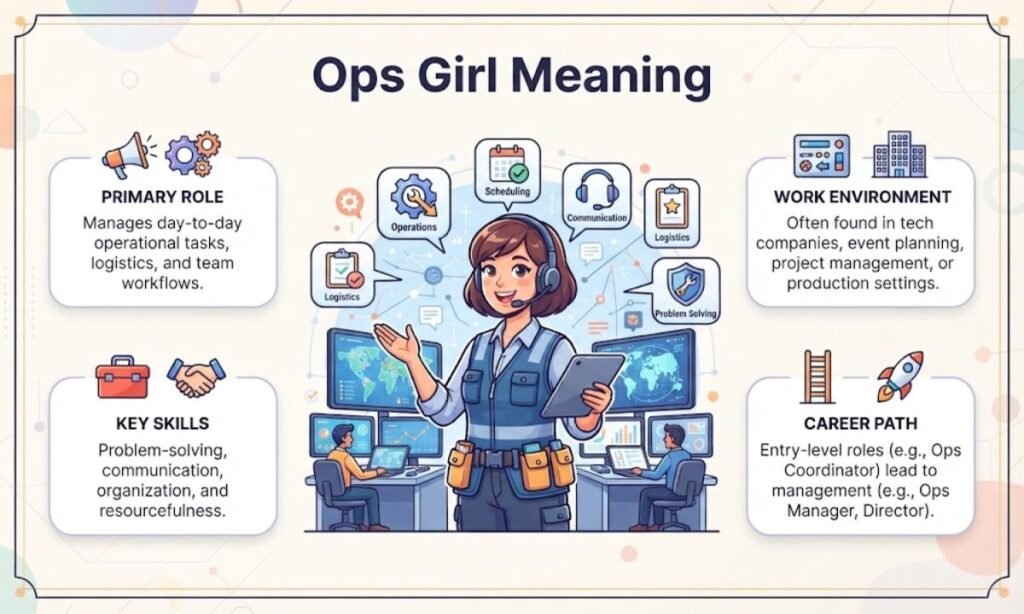
“Ops girl” typically refers to a girl connected to a rival group, or a girl someone considers a rival themselves.
In friend groups, it’s often used jokingly about a classmate, a competitor, or someone from a past disagreement.
It can also carry judgemental undertones about loyalty, which is worth being aware of. Used carelessly, it stops being a joke and starts being an insult about someone’s character.
Conclusion
OPS is a small word with a big range. Most of the time it means enemies or rivals, and most of the time it’s a joke. One extra letter, though, and it turns into a business department or a baseball stat.
Read the spelling first. Then read the tone. Emojis and context will tell you almost everything you need to know.
Use it with friends who already use it, and skip it at work or with people who won’t get it. Slang works best when everyone in the chat is speaking the same language.
If you’re ever unsure what someone meant, just ask. One short question beats an hour of guessing, and nobody has ever lost a friendship over asking what a word means.
Frequently Asked Questions
What does “ops” mean in professional text communication?
In professional messages, “ops” is short for operations — the teams and processes that keep a business running day to day. It has no slang meaning at work.
What does “ops” signify in a technology startup?
At a startup, “ops” refers to operational functions like DevOps, infrastructure, or internal systems. It usually names a team or a workflow, not a person.
How is “ops” commonly used in business messaging platforms?
On Slack or Teams, “ops” appears in channel names and phrases like “looping in ops” or “ops review.” It identifies the operations department handling a task.
What companies use the term “ops” in their internal communications?
Most mid-size and large companies use it, especially in tech, logistics, finance, and e-commerce. Common variants include SalesOps, RevOps, SecOps, and DevOps.
How does “RevOps” improve business performance?
RevOps aligns sales, marketing, and customer success under shared data and processes. That reduces handoff friction and makes revenue forecasting more accurate.
How do tech firms define “ops” in their team chat?
Tech firms use “ops” for the group maintaining systems, deployments, and reliability. It signals infrastructure and process work rather than product development.

I am a dedicated author with 6+ years of experience writing and researching content for name meaning websites. My expertise includes American names, baby names, surnames, name origins, and cultural significance. I focus on creating accurate, well researched, and easy to read articles using trusted sources. My goal is to help readers discover the history, meaning, and uniqueness behind every name with reliable and engaging content.